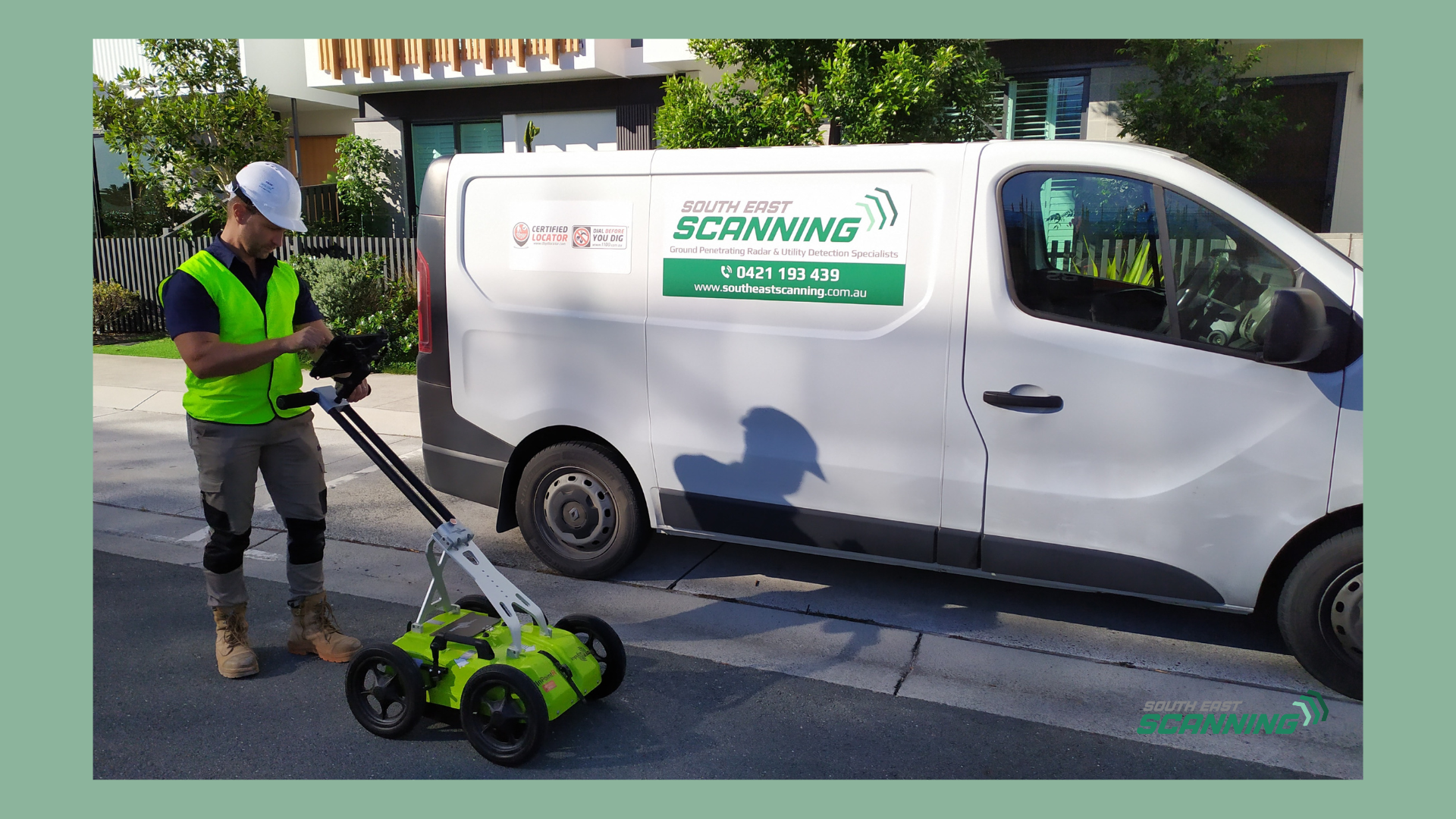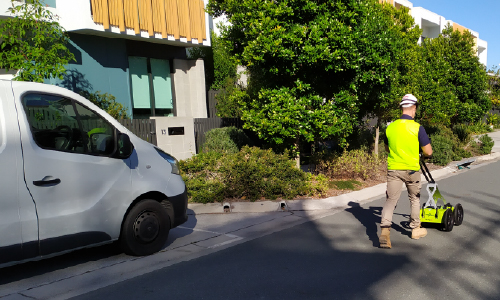
When it comes to understanding what's hidden inside concrete before you cut, core, or drill, two technologies are most commonly discussed: Ground Penetrating Radar (GPR) concrete scanning and concrete X-ray. Both are non-destructive testing methods. Both can detect rebar, post-tension cables, and conduits. But they work very differently, suit different situations, and carry different practical implications for your project. Choosing the wrong one doesn't just slow you down — it can affect the quality of the data you're working with. This guide breaks down exactly how each method works, where each performs best, and how to decide which is right for your job.
Understanding the underlying physics of each method makes the decision much easier. They are genuinely different tools — not two versions of the same thing.
GPR Concrete Scanning
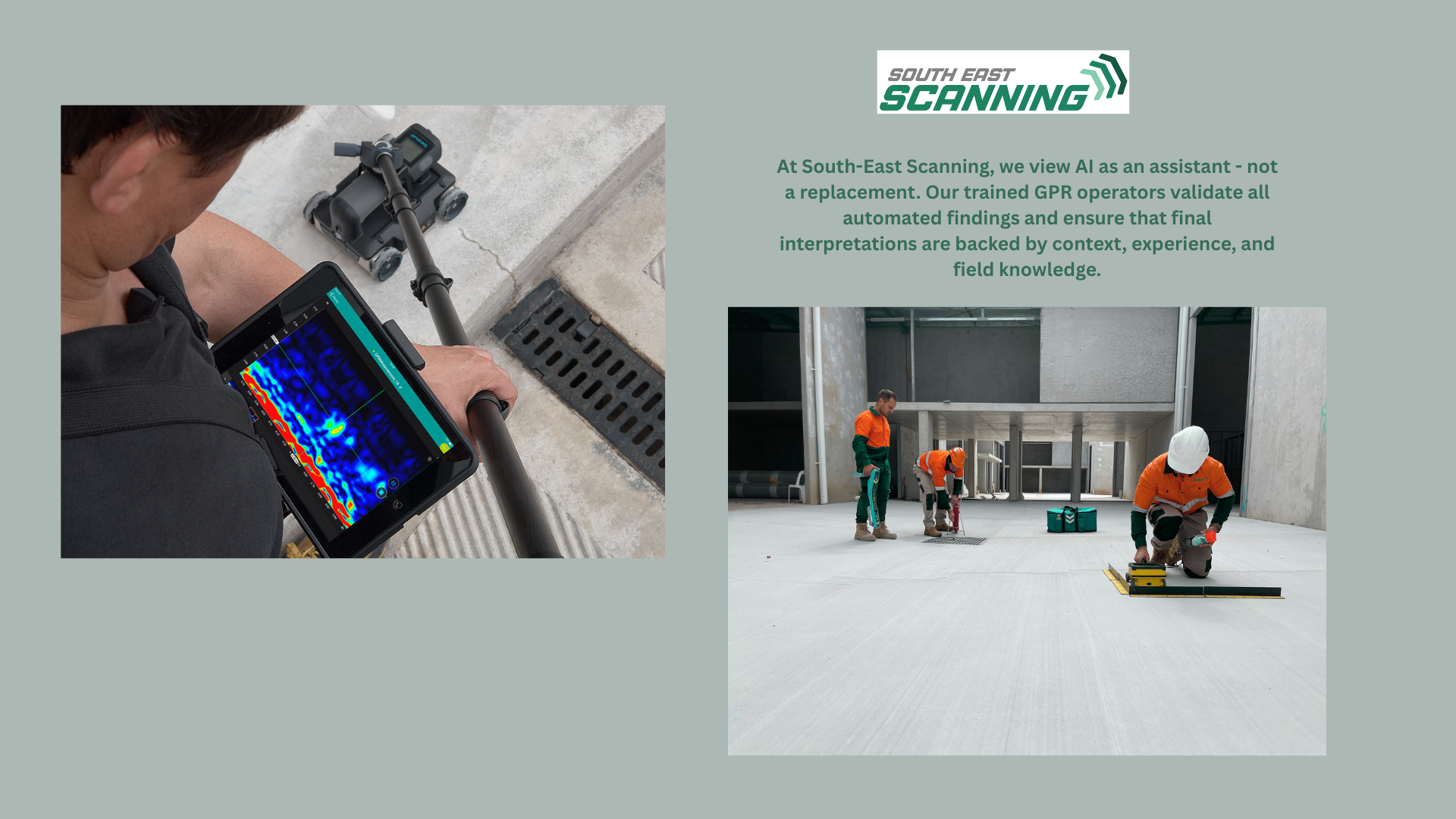
Sends high-frequency electromagnetic pulses into the concrete from one side. Signals that bounce back from embedded objects are captured and rendered in real time on a screen. Scanning is done from the surface only — no access to the opposite face is needed. Results are visible on site as the technician works.
Concrete X-Ray
Uses ionising radiation (similar to a medical X-ray) to pass a beam through the concrete and capture a detailed image on a film or digital plate placed on the opposite side. Requires access to both faces of the slab or wall. Produces extremely high-resolution images, particularly useful for small or densely congested areas.
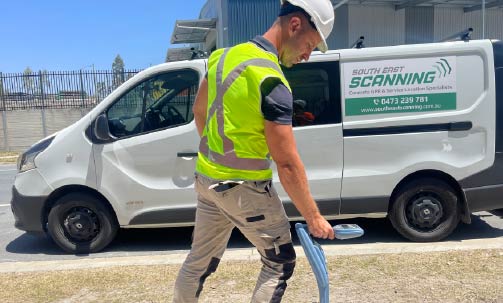 GPR Scanning vs Concrete X-Ray — Two Different Approaches
Here's how the two technologies compare across the factors that matter most on a real project:
Concrete X-ray uses ionising radiation, which means all personnel must vacate the immediate area during image capture. On busy construction sites, this can significantly impact workflow and scheduling. GPR scanning carries no radiation risk and can be performed alongside other trades.
GPR scanning is the preferred choice for the vast majority of construction and renovation projects. Its ability to cover large areas quickly, work from a single surface, and produce real-time results makes it the practical default for most site conditions. It excels across ground-bearing slabs, suspended floors, walls, and any situation where speed, accessibility, or scale is a priority. For detecting voids beneath slabs or mapping reinforcement across an entire floor plate, GPR is unmatched in efficiency.
Concrete X-ray earns its place in situations requiring the highest possible image resolution within a small, defined area — particularly where the concrete is very heavily reinforced or congested, or where fine detail is needed for an engineering assessment. It is also commonly used when scanning from both faces of a suspended slab or wall is accessible and the area in question is compact. Think small penetration locations in complex structures rather than full floor scans.
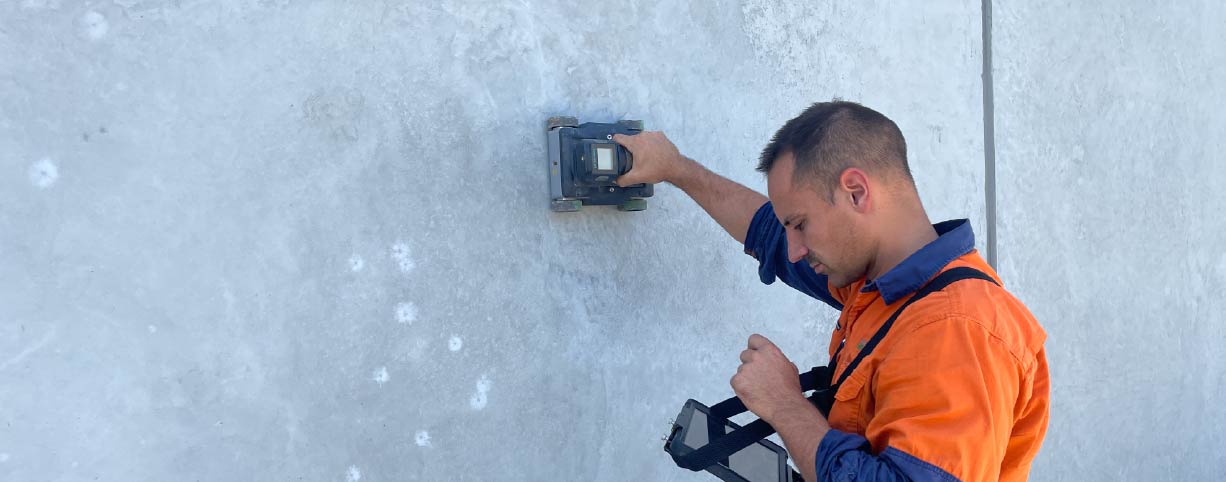 GPR — Ideal for Large Area Coverage
 Complex Structures — Where X-Ray Adds Detail
For most jobs, the decision is straightforward. Use GPR scanning when you need to cover ground quickly, are working on a slab-on-ground, or need to assess a large area before concrete cutting or core drilling. Consider X-ray when you're working on a small, specific penetration location in a heavily congested suspended structure, you have access to both faces, and the area can be safely cleared.
Use GPR: Residential & Commercial Renovations
Use GPR: Core Drilling & Large Floor Surveys
Use X-Ray: Complex Penetrations in Suspended Slabs
Use X-Ray: High-Detail Engineering Assessments
Why GPR Wins for Most Projects
For the overwhelming majority of construction and renovation work, GPR scanning is the faster, safer, and more practical choice. No radiation. No site clearance. No need for access underneath. Results appear in real time so safe cutting zones can be marked immediately and work continues without interruption.
Both GPR scanning and concrete X-ray are valuable tools — but they are not interchangeable. GPR is the right choice for the vast majority of projects: it's fast, safe, requires access from one side only, and delivers real-time results that let work proceed the same day. Concrete X-ray has a narrower but important role, particularly for small high-detail assessments in complex suspended structures where exceptional image resolution is required.
At South East Scanning, we carry both capabilities and will always recommend the most appropriate method based on your specific site conditions, structure type, and what you need to know. Our blog on concrete X-ray vs GPR scanning covers more of the technical differences in depth, and you can explore our full concrete scanning services to understand what a typical investigation involves. Not sure which method suits your project? Get in touch with our team today — we'll give you a straight answer and a fast quote.