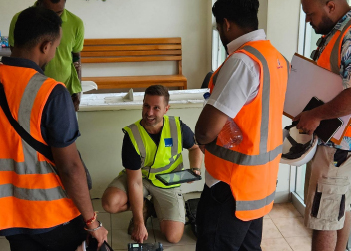
Renovating or demolishing a property is an exciting undertaking — whether you're modernising a home, upgrading a commercial space, or reimagining an entire building. But one step that gets skipped far too often is professional concrete scanning before any cutting, drilling, or demolition begins. Concrete regularly contains hidden structural and utility elements that are completely invisible from the surface — and disturbing them without warning can lead to safety incidents, structural damage, and unexpected costs that blow out timelines and budgets. Here are five clear signs that your project needs a concrete scan before work gets underway.
If your renovation requires cutting through, drilling into, or coring out existing concrete slabs or walls, scanning is not optional — it's essential. Concrete commonly contains reinforcing steel (rebar), post-tension cables, and electrical or plumbing conduits that offer no surface indication of their presence. Any of these can be damaged by a drill bit or saw blade, with consequences ranging from damaged tools and costly repairs to serious worker injuries.
Post-Tension Cable Risk
Post-tension cables are under extreme compressive force. Severing one without preparation causes a sudden, violent energy release that can be catastrophic for workers and equipment in the immediate area. Our guide on locating rebar, post-tension cables, and conduits before cutting explains exactly what's at stake and how to prepare safely.
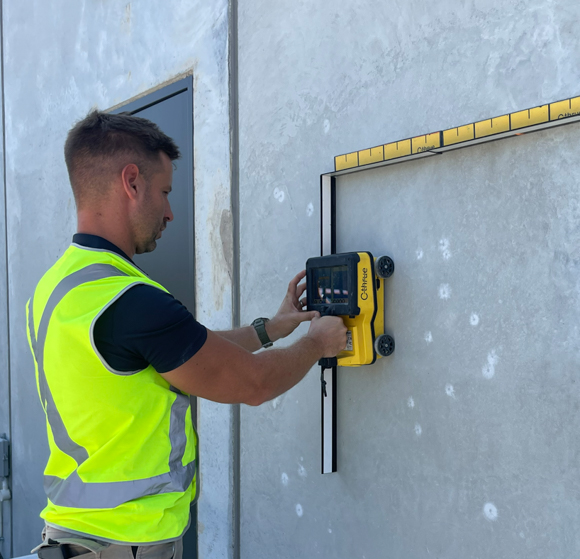
Scanning before any concrete cutting or core drilling gives your team a precise map of what lies beneath — marking safe working zones and eliminating guesswork before a single blade touches the surface.
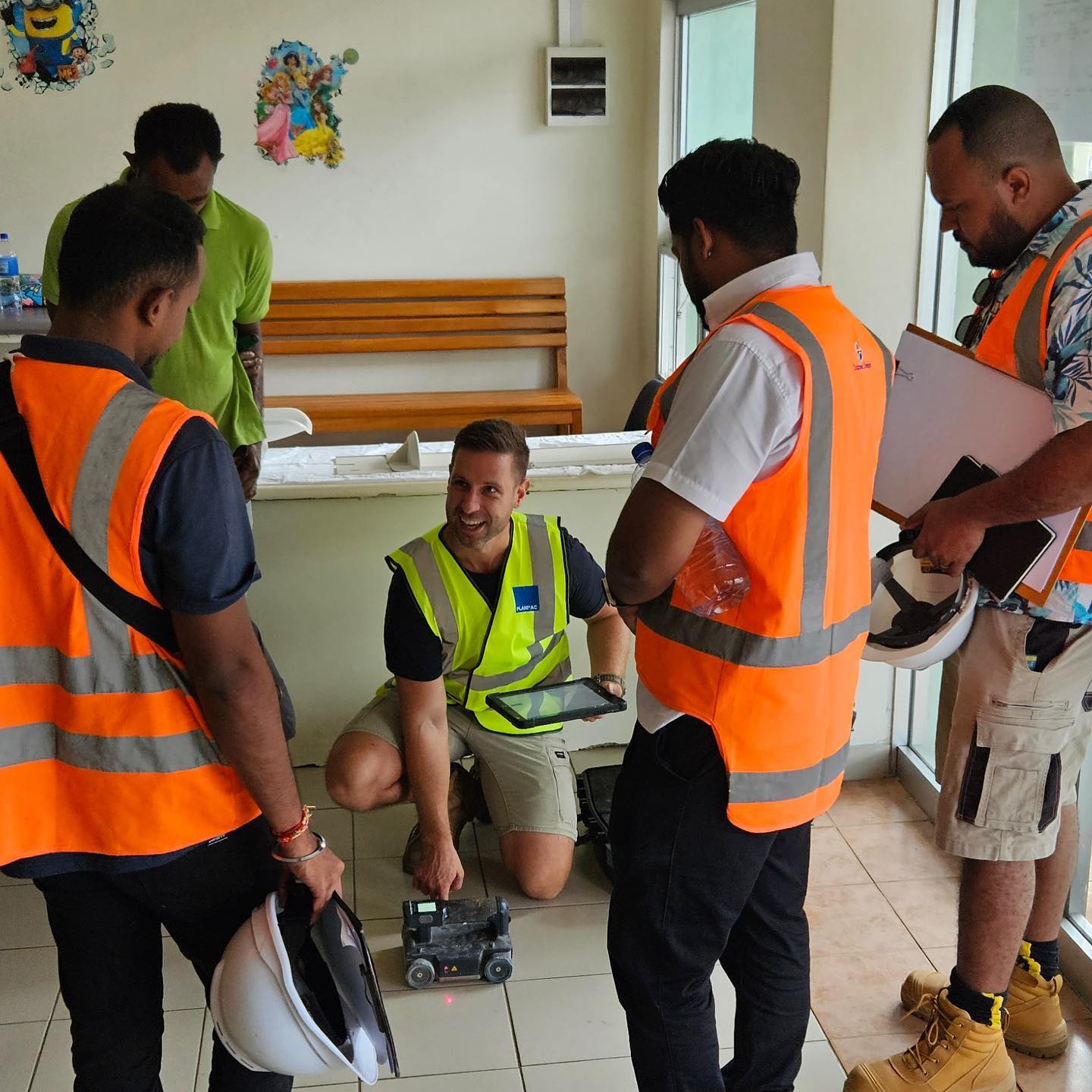 Scanning Before Cutting — The Right Order of Operations
Demolishing concrete structures without prior scanning is a reliable way to create unexpected and expensive problems. Older buildings especially tend to have utilities, conduits, and reinforcement buried in walls and floors — often with little or no documentation. Proceeding without a scan risks severing electrical lines, rupturing plumbing, and compromising structural elements you weren't expecting to encounter.
Scanning gives demolition teams the information they need to plan their approach methodically — knowing exactly what is embedded where, so nothing critical is disturbed accidentally.
Sometimes the concrete itself tells you something is wrong before the renovation even starts. Cracking, uneven surfaces, rust staining, or water leaking through the slab are all potential indicators of internal problems — corroded rebar expanding beneath the surface, compromised reinforcement, or developing voids. These aren't cosmetic issues to patch over; they are signals that the internal structure needs to be assessed before any further work disturbs it.
What Surface Damage May Indicate
Rust stains often reveal corroding rebar beneath the surface. As steel corrodes, it expands — causing the surrounding concrete to crack and spall. A concrete slab inspection using GPR can locate the affected reinforcement and confirm the extent of deterioration before renovation work begins, allowing builders and engineers to plan effective remediation rather than discovering problems mid-project.
A crack in the surface may reflect a small blemish — or it may indicate active corrosion, a developing void, or compromised reinforcement that will become a major structural problem during renovation. Scanning identifies which it is before you commit to a course of action.
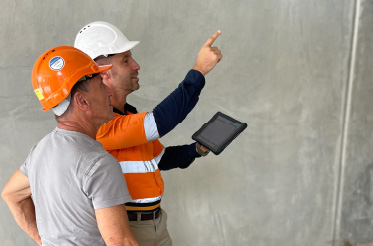
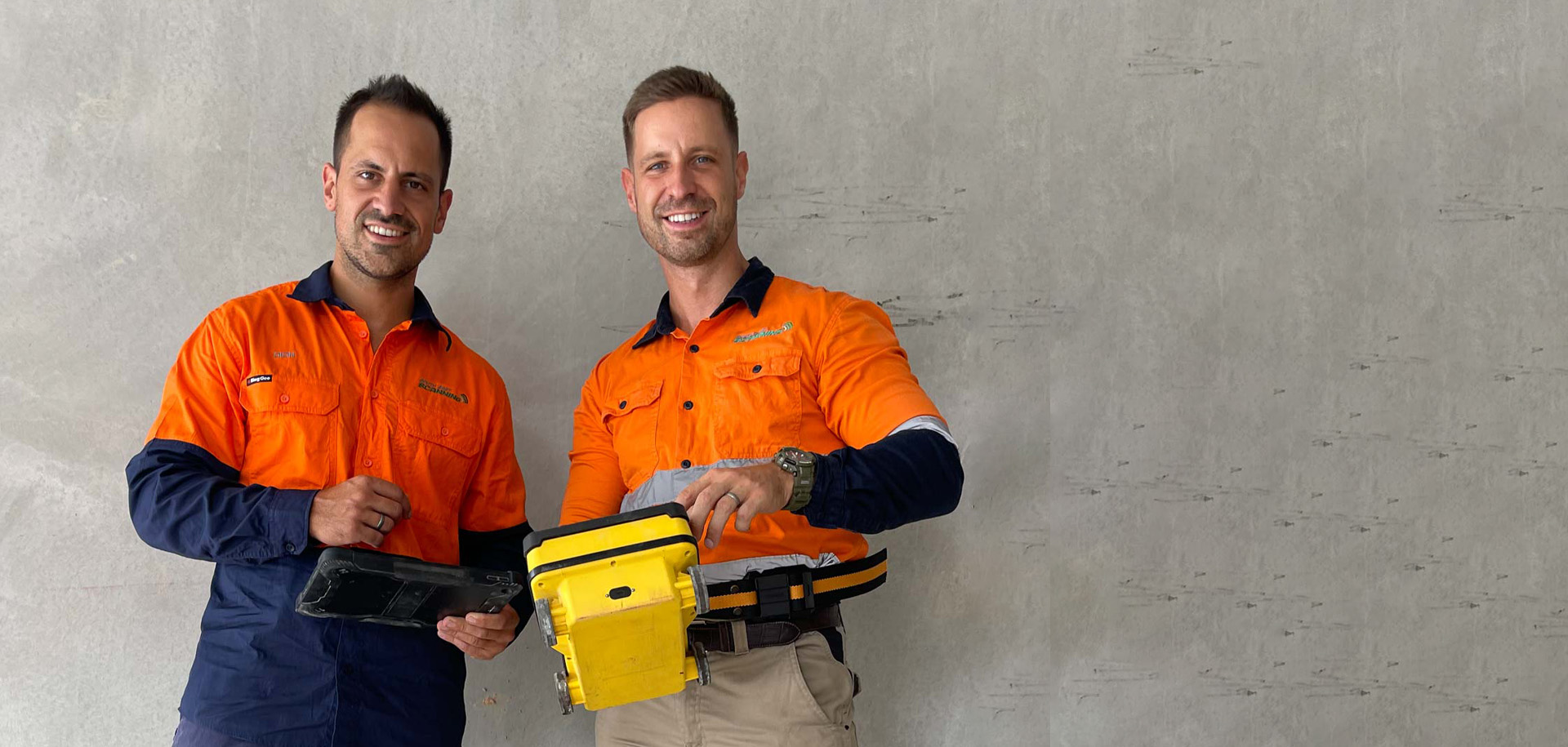 On-Site Assessment Before Renovation
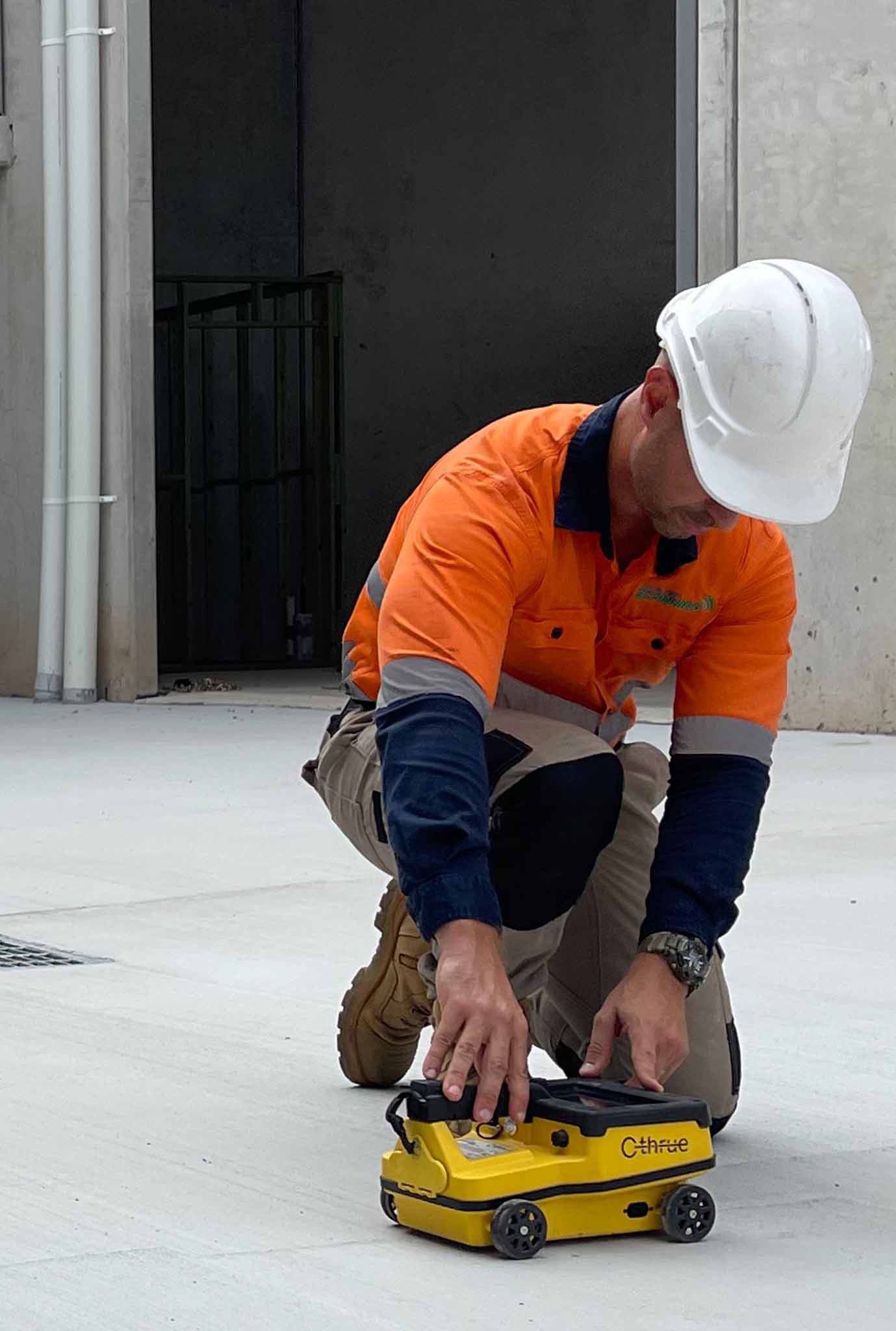 Concrete Slab Inspection Results
Properties built several decades ago — or any property where construction records are incomplete or unavailable — present a significantly higher risk. Construction practices have changed considerably over time, and older slabs may contain unconventional reinforcement configurations, obsolete conduit layouts, or buried services that were never formally documented. Without a scan, you are working blind.
This applies equally to heritage properties, repurposed industrial sites, and mixed-use buildings where the original structure has been modified multiple times. Every alteration that occurred without formal documentation adds another layer of uncertainty. Hidden risks in concrete slabs can accumulate across decades of modifications — scanning is the only reliable way to build a current, accurate picture of what's actually there.
Ground Penetrating Radar (GPR)
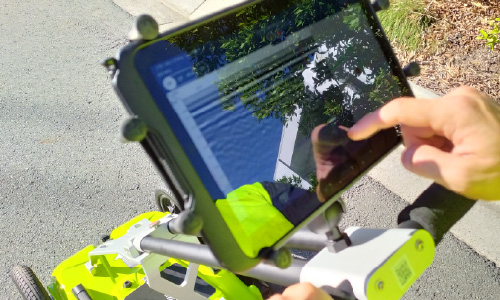
GPR sends electromagnetic pulses into the concrete and interprets the signals that bounce back from embedded objects. The result is a real-time map of reinforcement, conduits, post-tension cables, and voids — built from one side of the surface with no damage to the structure whatsoever.
Concrete scanning isn't just about safety — it is one of the most cost-effective investments you can make in a renovation or demolition project. The financial consequences of accidental damage to embedded elements can be significant: flooding from a struck pipe can shut down a site for days, severed electrical conduits require an electrician to re-route wiring through repaired concrete, and a damaged post-tension cable may compromise an entire slab.
Scanning before work begins allows contractors to plan the most efficient, lowest-risk workflow from the outset. It reduces downtime, prevents unplanned repairs, and gives clients the confidence that all foreseeable risks have been assessed and mitigated before the first tool touches the surface.
Enhanced Safety
Protects workers from electrical, structural, and cable-release hazards before they become incidents.
Project Efficiency
Knowing exactly where to cut and drill eliminates guesswork and keeps trades moving without interruption.
Cost Control
Prevents expensive remediation, structural assessments, and repair costs caused by accidental damage.
Client Confidence
Demonstrates professional due diligence and reassures clients that risks have been thoroughly assessed.
If your project involves any cutting, drilling, demolition work, visible concrete damage, undocumented construction, or simply a need to stay on time and within budget — concrete scanning belongs at the top of your pre-works checklist. The five signs above are not edge cases; they apply to the vast majority of residential and commercial renovation and demolition projects in Queensland. Skipping this step is a gamble that rarely pays off.
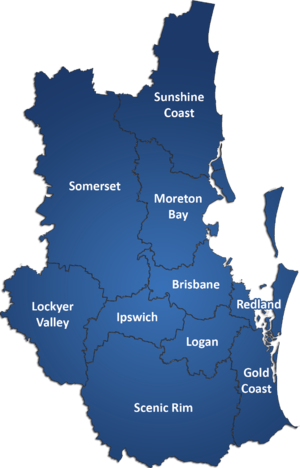
At South East Scanning, we provide fast, thorough GPR scanning services across South East Queensland with same-day reporting as standard. Whether you need a full floor survey, targeted scanning around a specific penetration location, or a comprehensive concrete slab inspection to support an engineering report, our team is ready to help. You can also read more about how concrete scanning prevents costly construction mistakes on our blog. Request a free quote today — and start your renovation with certainty, not surprises.