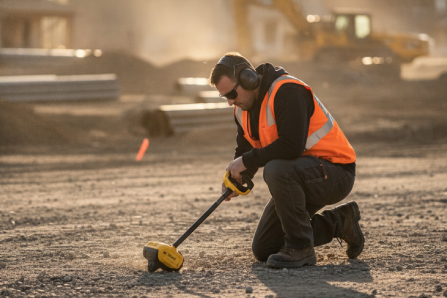
Queensland's construction sector is racing toward its biggest decade on record, yet the workforce driving that growth is greying fast and thinning out at the entry level. That mismatch between rising project volume and shrinking on-site experience is quietly reshaping how risk gets managed on Queensland sites, and it's why non-destructive testing is shifting from a nice-to-have to a practical necessity for builders, concreters, and engineers across the region.
A recent QBCC industry snapshot put a hard number on something many people in the trade already sensed anecdotally: the average age of a Queensland construction worker now sits around 49, and only about 6% of the workforce is under 30. That's not a minor demographic wobble, it's a structural shift. The generation of site supervisors, foremen, and senior tradespeople who cut their teeth on decades of hands-on work is heading toward retirement faster than it's being replaced, and the pipeline of younger workers coming up through apprenticeships and traineeships simply isn't deep enough yet to backfill that experience at the same rate.
Ageing Fast, Growing Faster
Queensland's construction workforce is greying at exactly the moment the state's project pipeline is accelerating — a genuine capacity squeeze on the depth of practical knowledge available per site, not just on labour supply.
At the same time, the investment side of the ledger is moving in the opposite direction. Construction investment in Queensland is forecast to climb from roughly $53 billion to around $77 billion by 2026-27, fuelled by a wave of housing supply catch-up, transport and utilities infrastructure, and preparation works tied to the 2032 Brisbane Olympics. More projects, more sites, more concrete being poured and more ground being broken, all happening while the pool of workers who've seen it all before gets smaller relative to the workload. It's a genuine capacity squeeze, not just on labour supply but on the depth of practical knowledge available per project.
 Verified Data, On Every Site
For a long time, the construction industry has leaned on experienced judgment to fill gaps that formal documentation couldn't. A veteran site supervisor who'd worked a particular suburb for twenty years often had a reasonable feel for where old stormwater lines ran, how a certain era of slab was typically reinforced, or which walls were likely to be load-bearing based on the building's age and style. That kind of institutional knowledge was never perfect, but it acted as an informal safety net, catching risks before they became expensive mistakes or safety incidents.
The problem is that this safety net was always a substitute for verified data, not a replacement for it, and it only worked because there were enough experienced people around to apply it consistently. As that generation retires and fewer sites have someone with thirty years of local knowledge on the crew, the gap left behind isn't filled by better documentation or more conservative practices by default.
On a booming pipeline with tighter margins and faster timelines, the gap left by retiring experience is often filled by guesswork from less experienced supervisors under pressure to keep schedules moving — and the consequences of getting it wrong, whether that's cutting into a live electrical conduit, hitting post-tensioned cable in a slab, or misjudging a structure's condition, land just as hard regardless of how experienced the crew was.
 On-Site Verification
 Confirming What's Actually There
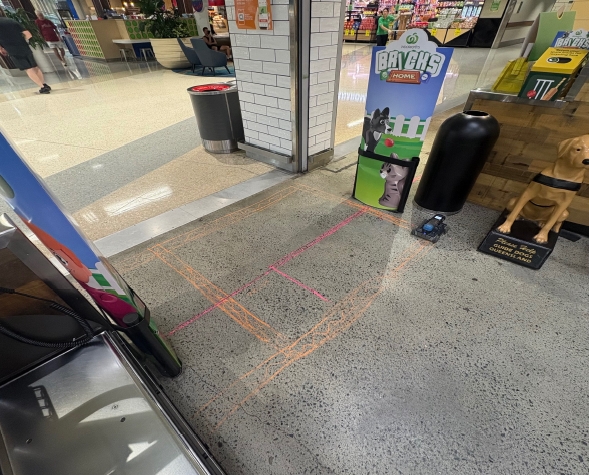
This is precisely the gap that precision scanning and locating is built to close. It doesn't depend on who happens to be standing on site that day, and it turns subjective calls about a structure's condition into measurable, documented findings.
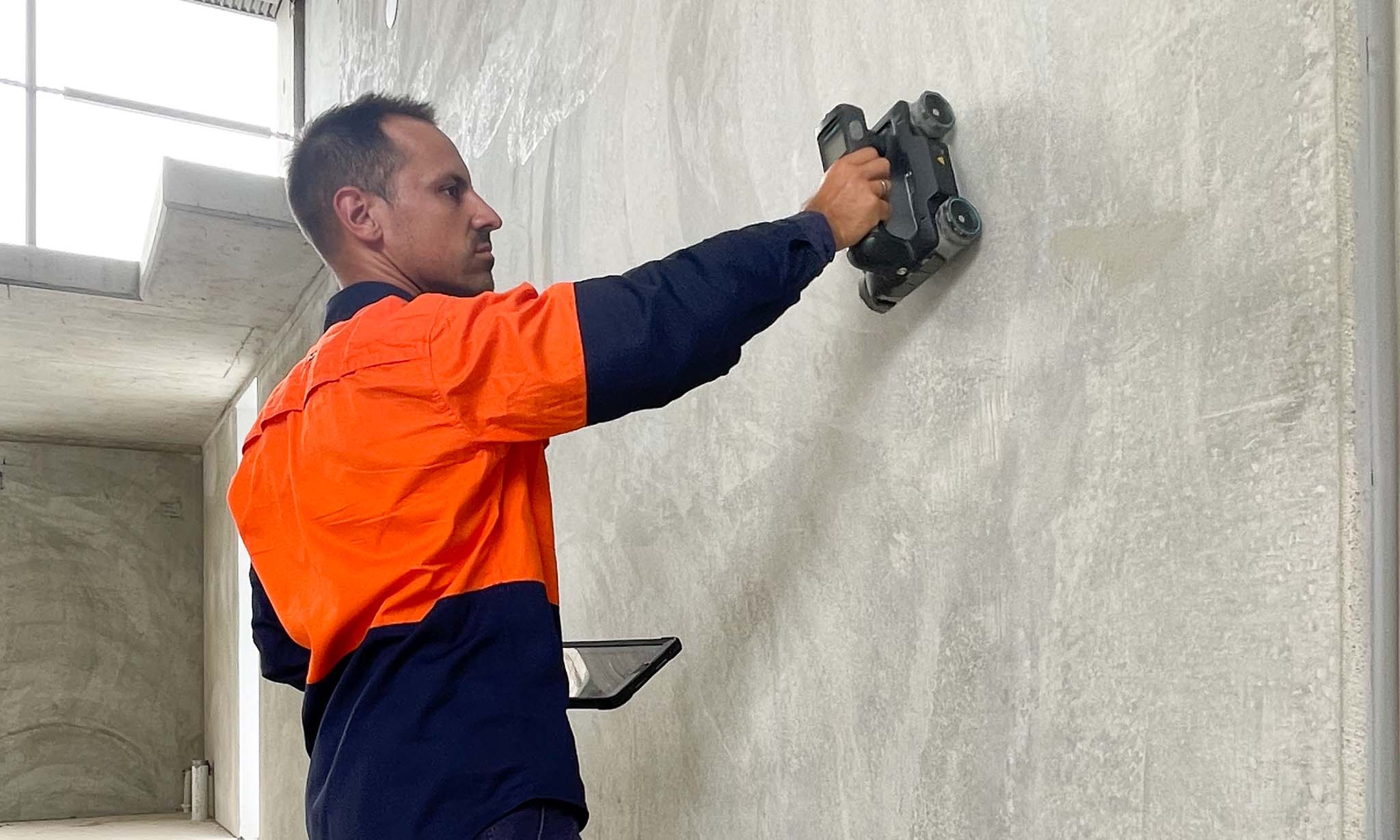
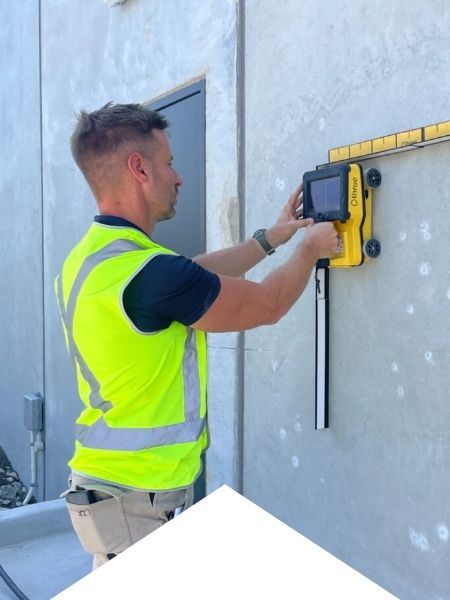
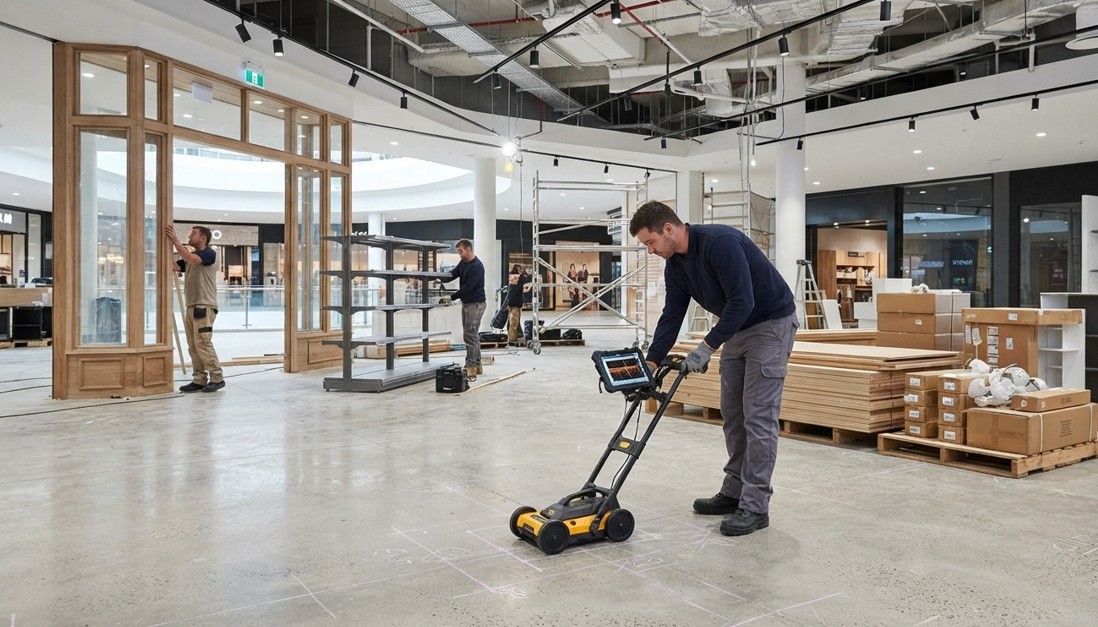
Ground Penetrating Radar Concrete Scanning
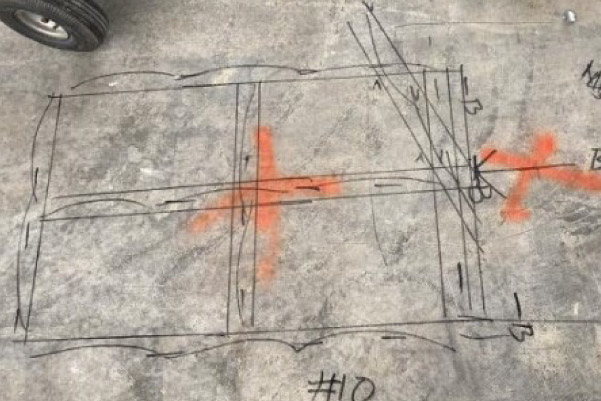
Gives a site team a clear, verified picture of what's inside a slab or wall before anyone drills, cuts, or cores, identifying reinforcement, conduits, post-tensioned cables, and voids without relying on anyone's memory of "how they usually build things around here."
Utility & Service Locating
Utility and service locating in line with Dial Before You Dig obligations does the same job below ground, mapping buried services so excavation teams aren't relying on old plans or assumptions about where a line was laid decades ago.
Thermal, UPV & Structural Assessments
Thermal scanning, ultrasonic pulse velocity testing, and moisture or structural condition assessments extend the same principle further, turning subjective calls about a structure's health into measurable, documented findings.
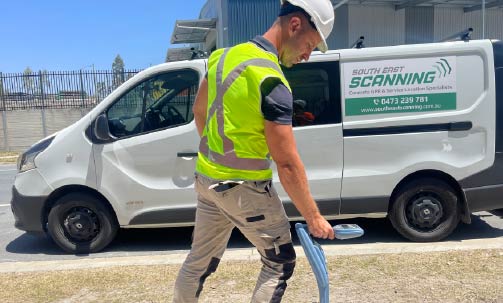
The value of this approach is that it doesn't depend on who happens to be standing on site that day. A GPR scan report or a utility locating map carries the same reliability whether it's read by a supervisor with three decades of experience or a graduate engineer six months into the job. For a workforce that's losing its most experienced hands faster than it's replacing them, that consistency is exactly what keeps projects moving safely without needing every crew to have a veteran on it.
 Consistent Results, Regardless of Experience
The practical response to a workforce and volume problem that isn't reversing any time soon is to stop treating scanning as an occasional precaution and start treating it as standard procedure, the same way a site would treat a survey or a soil test. When concrete scanning becomes a routine pre-drilling step rather than something reached for only after a near miss, it takes the pressure off individual judgment calls and puts the decision-making onto verified data instead. That's a more sustainable model for an industry that's about to run more projects, with fewer experienced people per project, than it has in a long time.
Program Certainty
Verified data ahead of cutting or digging means fewer surprises, delays, or redesigns once work is underway.
Consistent Data
A GPR report reads the same whether it's a veteran supervisor or a graduate engineer on site that day.
Faster Junior Onboarding
Less experienced staff build an accurate mental model of what's underground from real data, not folklore.
Reduced Risk
Verified findings replace guesswork under schedule pressure, protecting crews and structures alike.
This shift also has a training dimension worth noting. Less experienced site staff who work alongside regular GPR scanning and utility locating aren't just avoiding immediate risks, they're building a more accurate mental model of what's actually under a slab or below ground over time, informed by real data rather than folklore. That's a healthier way to develop judgment in a younger workforce than hoping enough incidents and near misses eventually teach the same lessons the hard way.
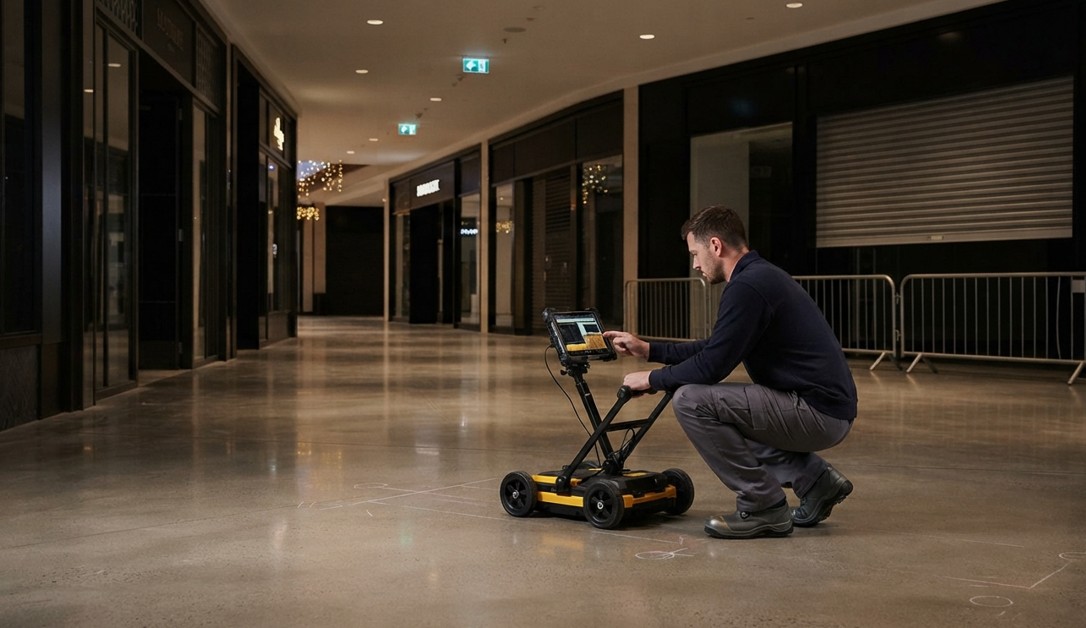 Confirmed & Complete
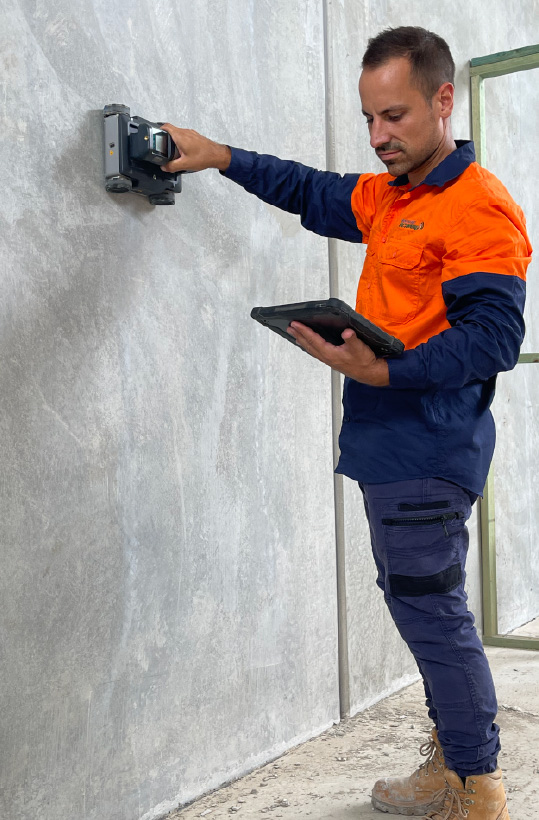 Planning With Verified Data
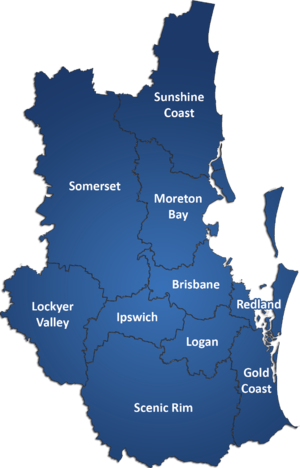
Queensland's construction industry is entering its biggest growth phase in decades at precisely the moment its most experienced hands are heading toward retirement. That combination makes verified, repeatable data — not institutional memory — the safety net the industry now needs. South East Scanning is a Queensland-owned business run by brothers Aidan and Dion, providing GPR concrete scanning, utility and service locating, thermal scanning, UPV testing, structural condition assessments, and geotechnical and drone surveying across the Gold Coast, Brisbane, Sunshine Coast, Ipswich, and regional Queensland.
If your team is managing a busier pipeline with a leaner crew, get in touch to build precision scanning into your standard site process before the next slab gets cut or the next trench gets dug.