
RPEQ certification
Independent RPEQ structural certification for concrete scanning and load-bearing assessment
A scan tells you where the steel is. It does not tell you whether you can cut, core or load. For projects that need a structural decision, we pair our scanning with an independent assessment by a Registered Professional Engineer of Queensland, issued as a separate certified engineering report.
What is RPEQ certification?
RPEQ certification is structural engineering certification signed by a Registered Professional Engineer of Queensland (RPEQ), the registration required to carry out or directly supervise structural engineering work in Queensland.
It's the formal confirmation a certifier, insurer, asset owner or principal contractor needs that a structure is fit for purpose, and the RPEQ sign-off you need before coring a suspended slab, adding new loads or changing how a building is used.
Our scan gives the RPEQ engineer the facts about what's in the concrete. The engineer's independent assessment answers the structural question, issued as a separate structural assessment report.

Our engineering partner
- CPEng
- NER
- RPEQ 37085
- RPEV
Caleb Napier, Director of Structural Engineering
Caleb Napier is Director of Structural at Axioma Engineering, with a background in heavy industrial, mining and infrastructure structures. Independent RPEQ assessments on this page are prepared and certified by Axioma Engineering.
Visit Axioma EngineeringCompleted RPEQ assessments
Recent structural inspection reports from our site investigations: the factual scan data an RPEQ engineer works from.
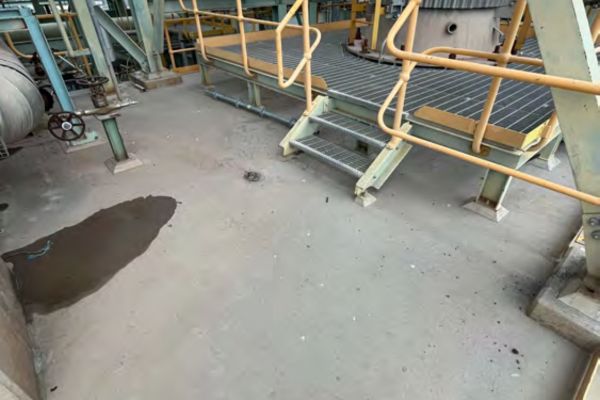 Industrial · Moura, QLD
Nitrates plant slab investigation
GPR investigation of an 800mm-deep reinforced concrete slab at an industrial facility, mapping reinforcement layout, spacing and cover across the slab, columns and plinths, including areas of overlapping reinforcement and a possible void flagged for further investigation.
View Report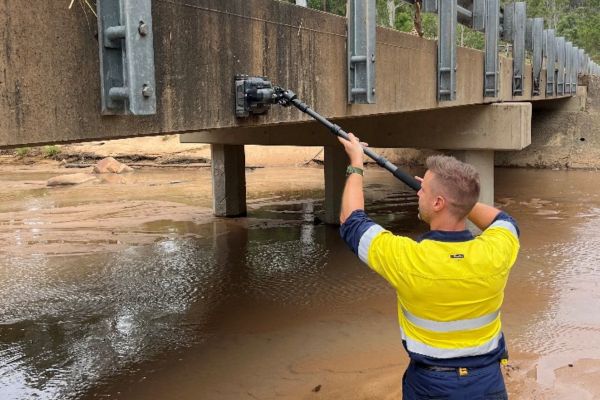 Infrastructure · Burton, QLD
Rural bridge reinforcement survey
GPR and Profometer survey of a rural bridge crossing, confirming reinforcement layout in the beams, deck and pier headstock and ruling out prestressing, validating the structure's as-built configuration against the available design drawings.
View ReportContact our team

When you need more than a scan
Common triggers for an independent RPEQ structural assessment on top of our scanning:
- Coring or penetrating a suspended slab
- Adding plant or equipment loads to an existing structure
- Verifying the capacity of an ageing industrial structure
- Satisfying an asset owner or principal contractor that a structural change has been assessed
- Resolving a dispute about existing reinforcement

Reasons you may need an RPEQ certification
- You're coring or penetrating a suspended slab, transfer beam, shear wall, or post-tensioned deck
- You're adding plant, equipment, or extra load to an existing structure
- A certifier, asset owner, or principal contractor needs formal sign-off on a structural change
- You need RPEQ sign-off to be eligible for a tender
How it works
- 1
Scan & record
Site scanning to a defined method with stated accuracy.
- 2
Engineering brief
One clear question agreed before the assessment starts.
- 3
Independent assessment
RPEQ assessment, calculation and certification, prepared by Axioma Engineering.
- 4
Two documents issued
The factual scan record, and the certified engineering assessment, separately.
Typical applications
The broader project types this covers, beyond the specific triggers above.
Slab & void assessment
Confirming slab condition and identifying subsurface voids ahead of construction, an extension, or works.
Load-bearing capacity
Assessing whether an existing structure can safely carry new loads.
Remedial works
Certifying the proposed repair methodology for cracking, subsidence, or water damage.
Change of use
Confirming a building is structurally fit for a new purpose when it's reclassified or repurposed.
What you receive
Your RPEQ certificate is issued as a standalone document, and includes:
- Annotated, scaled drawings
- Stated tolerances and limits of detection
- Structural calculation to the relevant Australian Standard
- Clear conclusion and any conditions
- RPEQ signature and stamp

Scan only vs. scan + RPEQ certification
Which one your project needs depends on what happens after the scan.
Turnaround
3–10 Days
Standard turnaround from a complete pack, depending on scope and complexity.
Expedited
Available on confirmation. Ask when you send your project details.
Built for industrial, commercial & resources
Where this service delivers the most value for your project.
Servicing South East Queensland and Central Queensland's resources and industrial corridor, including:
- Brisbane
- Gold Coast
- Ipswich
- Sunshine Coast
- Mackay
- Gladstone
- Rockhampton
- Moura
- Emerald
- Bowen Basin
- Surat Basin
Industrial & process plant
Process plant, conveyors and transfer stations, switchrooms and MCC buildings, tank and vessel supports, materials handling, fertiliser and chemical plant structures.
Structural asset integrity
Capacity assessment of existing reinforced concrete and steel structures, condition-driven remaining life, added plant loads on existing slabs and framing.
Penetration & core hole approvals
Suspended slabs, transfer beams, shear walls and post-tensioned decks.
Repeat & systemised work
Any deliverable that recurs across a portfolio and can be run to a standard method.

From site to certification
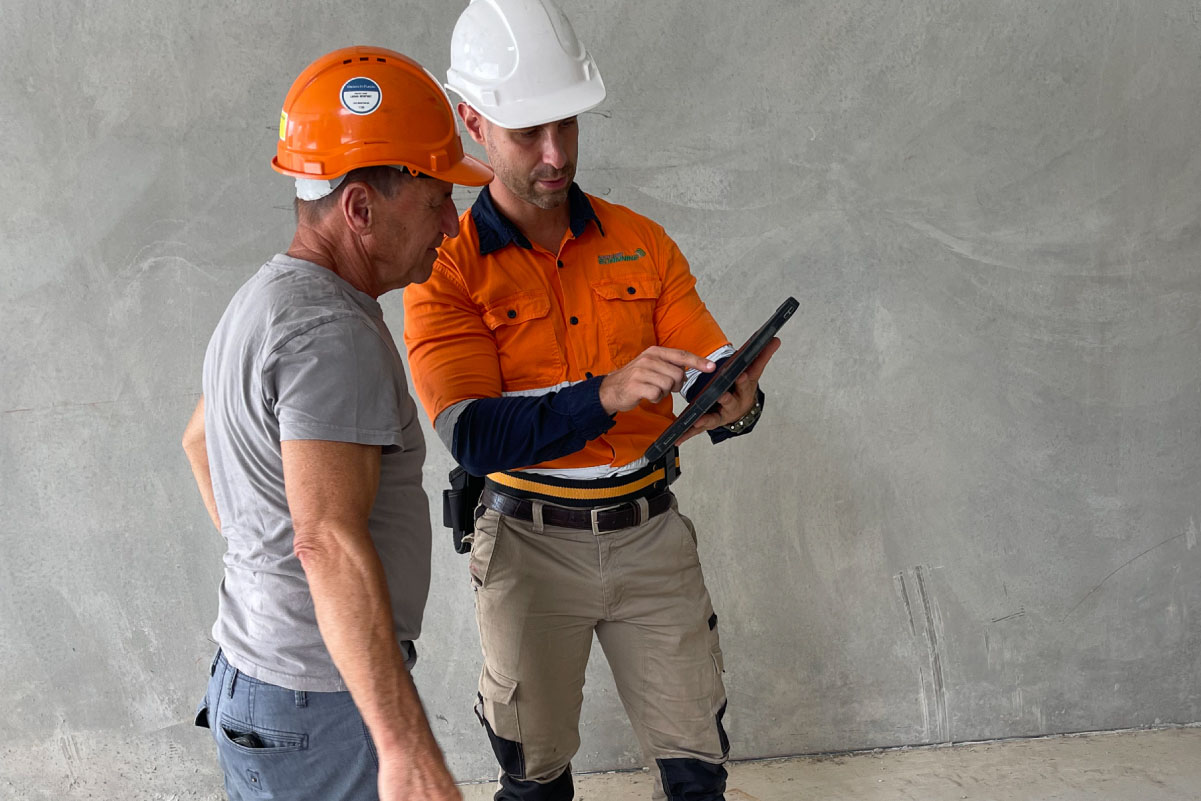
A look at the scanning and investigation work that feeds into an RPEQ assessment.




Frequently asked questions
Is your scan report certified by an engineer?
No. Our scan report is a factual record of what the scan detected. Where a project needs a certified structural opinion, that's a separate, independently prepared and signed assessment from Axioma Engineering, using our scan data as an input.
What is an RPEQ, and when is RPEQ certification required?
An RPEQ is a Registered Professional Engineer of Queensland, the legal registration required to carry out or directly supervise structural engineering work in the state. RPEQ certification is typically required wherever a certifier, insurer, asset owner or principal contractor needs formal confirmation a structure is fit for purpose.
What are the RPEQ certification requirements?
The certifying engineer must hold current RPEQ registration in the relevant area of practice, and the RPEQ certificate must state the scope, assumptions and limitations the assessment was prepared under. It's issued as a separate document to any factual scan or investigation report, not a signature added to someone else's report.
Who is the RPEQ engineer on my project?
Caleb Napier, Director of Structural at Axioma Engineering (CPEng, NER, RPEQ 37085, RPEV). Independent RPEQ assessments on this page are prepared and certified by Axioma Engineering.
Do you provide a structural adequacy certificate?
South East Scanning does not provide professional engineering services or issue certificates. If a certifier, asset owner or principal contractor has asked for a structural adequacy certificate, send us the request: the RPEQ engineer at Axioma Engineering confirms what can be certified, subject to the scope, assumptions and limitations stated in the engineering report.
Can you tell me the bar diameter from a scan?
Not reliably. GPR gives a strong read on bar location, cover and spacing, but diameter estimation from radar signal alone carries real uncertainty. Where diameter matters to the engineering question, we say so up front, and it's factored into how the assessment is scoped rather than assumed from the scan.
Do I need an engineer to core a slab?
Often, yes, particularly on a suspended slab, transfer beam, shear wall or post-tensioned deck, where cutting the wrong element can compromise structural capacity. Our scan identifies what's there; the independent assessment confirms whether the penetration is safe to proceed.
Does the engineer attend site?
Not as standard. Most assessments are prepared from the scan data and project brief. If your project needs site attendance, let us know when you send the details and we'll confirm whether that's required and what it adds to timeline and cost.
How long does certification take?
3–10 business days for a standard assessment from a complete pack, depending on scope and complexity. Expedited turnaround is available on confirmation.
What do you need from me before you can start?
The structure and the question: what you're trying to do (core, load, assess capacity) and any relevant drawings or context you have. Send that through and we'll confirm whether it needs an engineer, and what it costs.
Engineering assessments and certifications are provided by Axioma Engineering Pty Ltd, an independent structural engineering consultancy. Certification is issued under separate engagement and is subject to the scope, assumptions and limitations stated in the engineering report. South East Scanning does not provide professional engineering services.
