You need a 150 mm core for a new riser, a set of penetrations for services, or a trench through an existing floor. The slab looks solid, the scan shows where the steel is, and the cutting crew is ready to go. So do you really need an engineer before you core? On a suspended slab, the answer is often yes. Here's why a scan alone doesn't settle the question, which elements need the most care, and how an independent RPEQ assessment fits alongside your scanning so coring goes ahead with confidence.
A Scan Shows What's There. It Doesn't Say You Can Cut It.
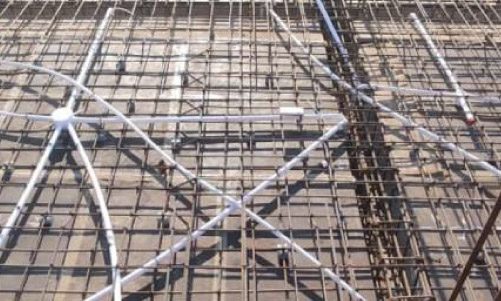
Concrete scanning is the essential first step before any core or cut. Ground penetrating radar gives a strong read on where reinforcement sits, how deep it is, its spacing, and the location of post-tension cables, conduits and voids. That lets your cutting crew avoid what's in the slab.
What a scan can't tell you is whether removing that section of concrete is structurally acceptable. A scan report is a factual record of what was detected. Deciding whether a slab, beam or wall can safely lose a core, and whether the remaining structure can still carry its loads, is a structural engineering judgement. In Queensland, that work needs to be carried out or directly supervised by a Registered Professional Engineer of Queensland (RPEQ).
The Scan Finds the Steel. The Engineer Decides If You Can Core.
Pairing the two gives you a factual scan record and a separately certified engineering assessment, so the decision to core is backed by both.
When Coring Needs an Engineer
Not every core needs engineering sign-off, but some structural elements carry far more risk than others. An independent RPEQ assessment is commonly needed when you're coring or penetrating:
Suspended Slabs
Floors spanning between supports, where every core reduces the section carrying the load.
Transfer Beams
Beams that pick up and redistribute loads from the structure above.
Shear Walls
Walls that resist lateral loads and help keep the whole building stable.
Post-Tensioned Decks
Slabs with stressed tendons, where locating every cable before cutting is critical.
You'll also need formal sign-off whenever a certifier, asset owner or principal contractor asks for confirmation that the penetration has been assessed, or when RPEQ sign-off is a condition of a tender.
Cutting a post-tension tendon is a serious safety risk and can compromise the slab. Map every cable before coring, and have the penetration assessed before any cutting starts. Our guide to mapping post-tension cables explains how the scanning side works.
 Scan First, Then Assess
Scan Only or Scan Plus RPEQ?
For a slab on ground or early planning, a scan on its own is often enough. When the question becomes "can we safely core here?", you need both.
| Scan Only | Scan + RPEQ Certification | |
|---|---|---|
| Answers | What's in the concrete | What's there, and whether it's safe to core |
| Deliverable | Factual scan record | Scan record plus a certified assessment |
| Certifier or insurer sign-off | No | Yes |
| Turnaround | Same day or per scan | Plus 3 to 10 business days |
| Best for | Planning and avoiding services | Penetrations needing a structural decision |
How a Core Hole Gets Approved
Our approach keeps the scanning and the engineering separate, so each document does its own job.
Scan and Record
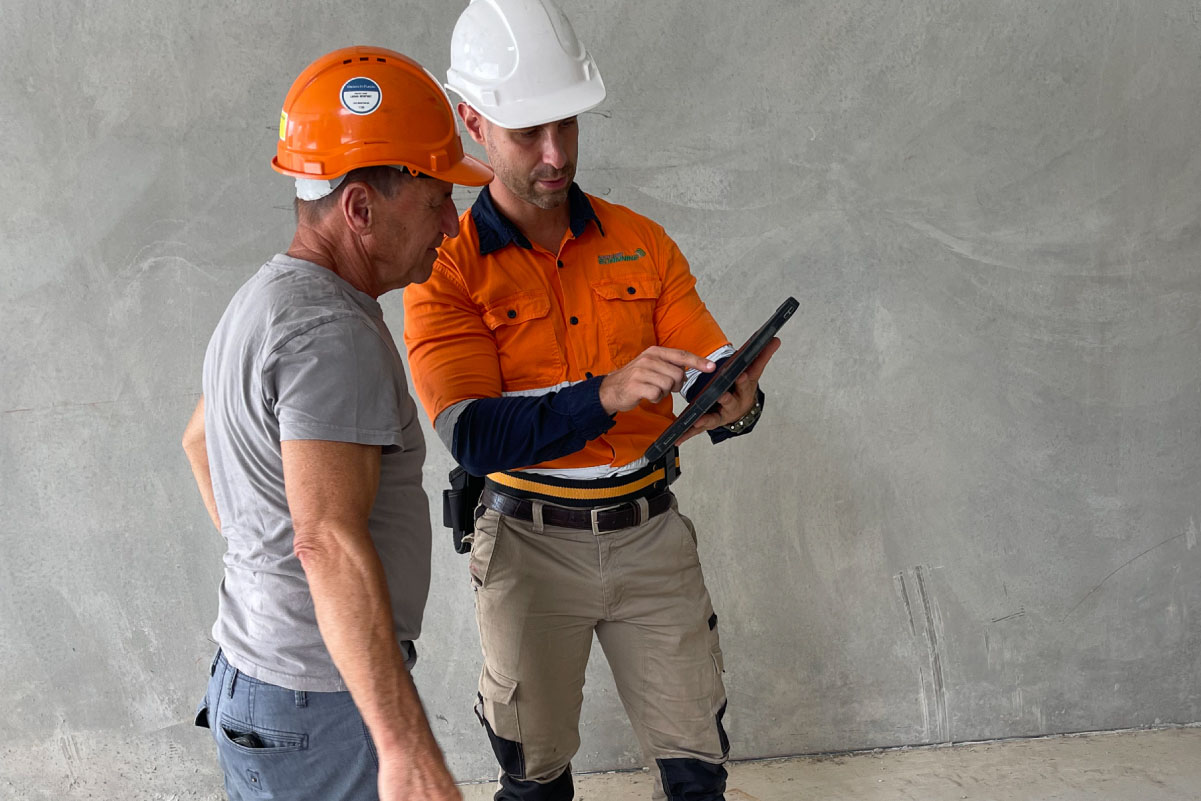
We scan the area around the proposed core to a defined method with stated accuracy, recording reinforcement, cover, spacing, cables and services.
Agree the Engineering Brief
One clear question is agreed before the assessment starts, for example whether a core of a given size can be taken at a given location.
Independent Assessment
Our partner RPEQ engineers at Axioma Engineering prepare the assessment and calculation to the relevant Australian Standard, then certify it.
Two Documents Issued
You receive the factual scan record and the certified engineering assessment as separate documents, ready for your certifier, asset owner or principal contractor.
 On-Site Scanning
 Annotated Scan Record
What You Receive and How Long It Takes
The certified assessment is issued as a standalone document. It includes annotated, scaled drawings, stated tolerances and limits of detection, a structural calculation to the relevant Australian Standard, a clear conclusion with any conditions, and the engineer's RPEQ signature and stamp.
A standard assessment takes 3 to 10 business days from a complete pack, depending on scope and complexity, and expedited turnaround is available on confirmation. Most assessments are prepared from the scan data and project brief, so the engineer doesn't usually need to attend site, though attendance can be arranged on request.
One thing worth knowing: GPR gives a strong read on bar location, cover and spacing, but it can't reliably confirm bar diameter. Where diameter matters to the assessment, we'll say so up front and factor it into the scope.
Frequently Asked Questions
Do I need an engineer to core a slab?
Often, yes, particularly for suspended slabs, transfer beams, shear walls and post-tensioned decks. The scan identifies what's in the concrete, and an independent RPEQ assessment confirms whether the penetration is safe.
Is a concrete scan report certified by an engineer?
No. A scan report is a factual record of what the scan detected. A certified engineering opinion is a separate assessment that uses the scan data as an input.
How long does RPEQ certification for a core take?
A standard assessment takes 3 to 10 business days from a complete pack, depending on scope and complexity. Expedited turnaround is available on confirmation.
What do you need from me to get started?
The structure and the question, such as the core size and location you need, plus any relevant drawings or context. We'll tell you within two business days whether it needs an engineer and what it costs.
A scan tells you where the steel is, but on a suspended slab, transfer beam, shear wall or post-tensioned deck, it takes an engineer to confirm you can safely core. Pairing the two gives your cutting crew, certifier and client the confidence that every penetration has been properly assessed.
If you have a core or penetration coming up, send us the structure and the question, or learn more about our RPEQ certification service. You can also call our team on 1300 175 543.