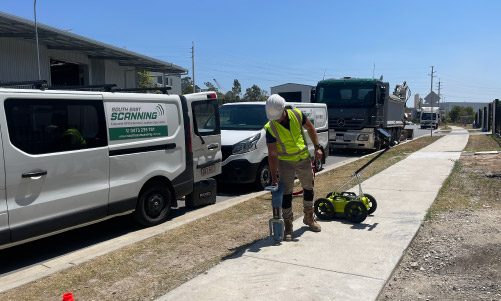
Queensland's electric vehicle charging network is expanding fast. Council depots, shopping centres, highway service stations, and workplace car parks across Brisbane, the Gold Coast, and the Sunshine Coast are being fitted with new charging infrastructure as state and federal rollout targets pick up pace. Every installation starts the same way — trenching for high-voltage cabling and conduit runs between the switchboard and the charger bay. But many of these sites, particularly former service stations, ageing retail centres, and council-owned land, carry decades of buried infrastructure that never made it onto a plan. Before the first trench is cut, a Ground Penetrating Radar (GPR) scan and electromagnetic locate should be standard practice, not an afterthought.
Charger installations aren't happening on greenfield sites. Councils are retrofitting existing car parks, retailers are adding chargers to shopping centre precincts built in the 1980s and 90s, and fuel and logistics companies are converting former servos into hybrid charging and fuel hubs. Each of these site types comes with its own buried history — old stormwater lines, abandoned telecommunications conduits, redundant lighting circuits, and in some cases infrastructure that was simply never recorded when it went in the ground.
Legacy Fuel Infrastructure
Former service stations are increasingly being repurposed for EV charging hubs. Decommissioned underground fuel storage tanks, product lines, and vent piping don't always get fully removed during redevelopment — and don't reliably appear on current utility records. Trenching into a site like this without scanning first is a serious and entirely avoidable risk.
Add to that the sheer density of services already running through retail and council land — power, telecommunications, water, and stormwater all converging in a relatively small footprint — and it's easy to see why charger trenching runs need more than a desktop check before crews break ground. The trench itself is usually shallow, but even a short run between a switchboard and a charger bay can cross several unrelated services laid at different times by different contractors, none of which were necessarily surveyed to today's standard when they went in.
 Scanning the Trench Line Before Cable Installation
Lodging a Dial Before You Dig (now Before You Dig Australia, or BYDA) enquiry is the correct first step for any excavation, and it's a mandatory one. But a BYDA response only returns plans from registered utility owners — the water authority, the electricity distributor, the telco networks. It says nothing about private, on-site infrastructure: redundant fuel lines, old irrigation, a previous tenant's data cabling, or a stormwater pit that was rerouted twenty years ago and never resurveyed.
Plenty of EV charger sites — especially redeveloped servos and older retail precincts — have infrastructure that predates current registration systems entirely. A clean BYDA certificate only confirms what's registered, not what's actually there.
This is exactly the gap that on-site GPR and electromagnetic locating are designed to close, confirming what's physically present rather than what's on record.
GPR & Electromagnetic Locating
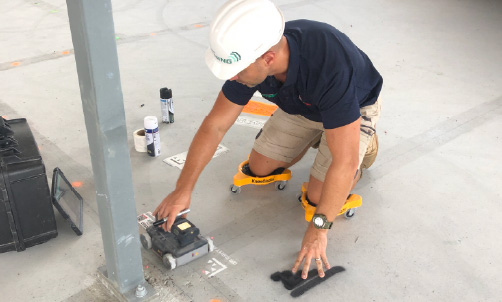
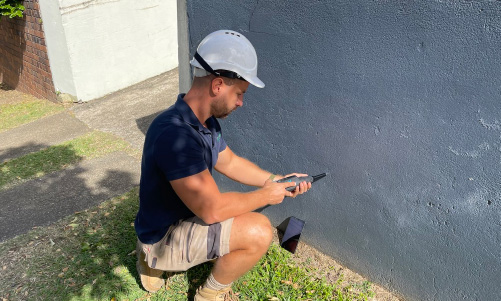
GPR sends radar pulses into the ground and reads what bounces back, mapping conduits, pipes, tanks, and voids along the proposed trench line. Combined with electromagnetic (EM) locating for live conductive services, it gives installers a confirmed, real-time picture of the ground before excavation — well beyond what a BYDA plan alone can offer.
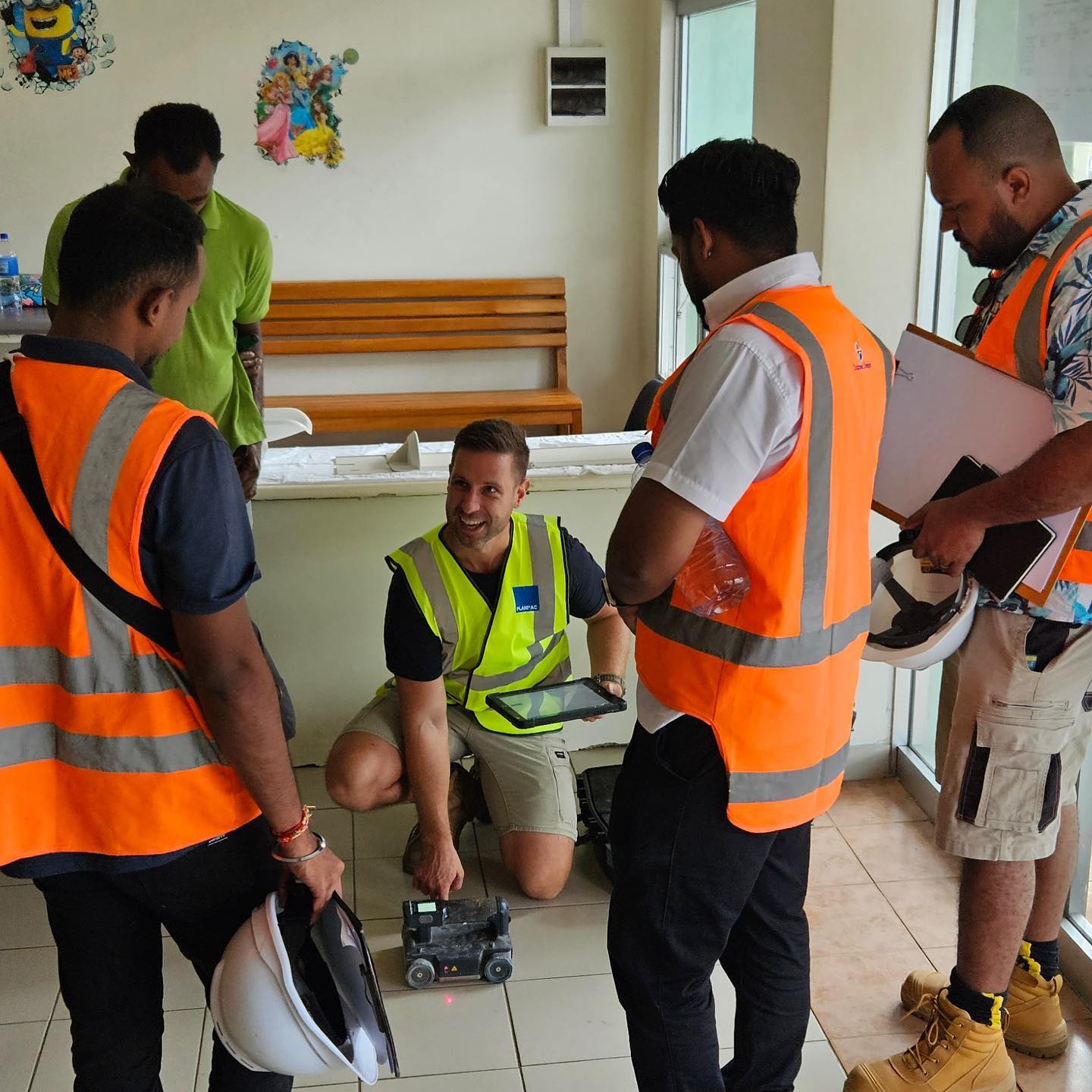
 Planning the Trench Line On Site
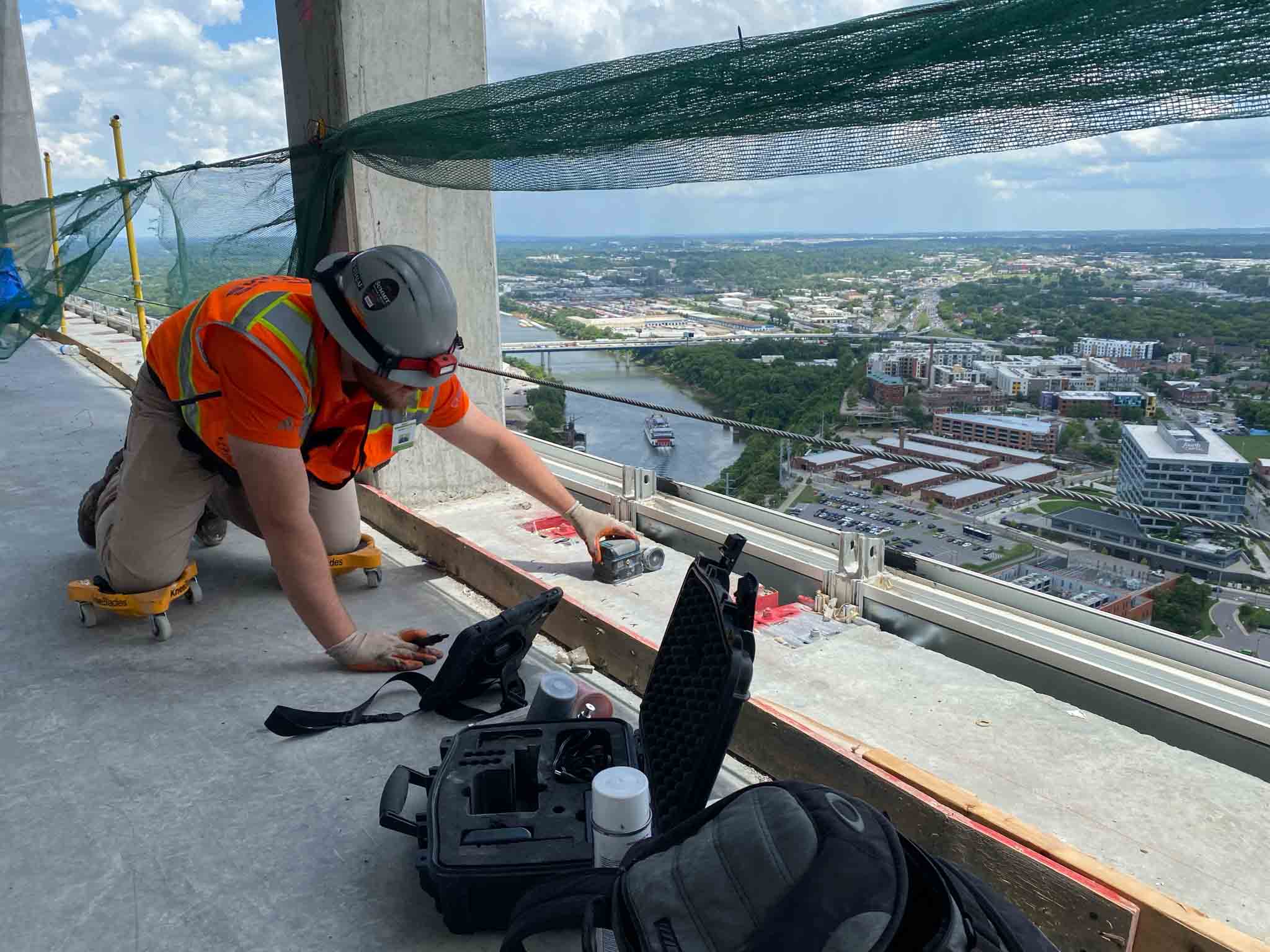 GPR Scanning Ahead of Excavation
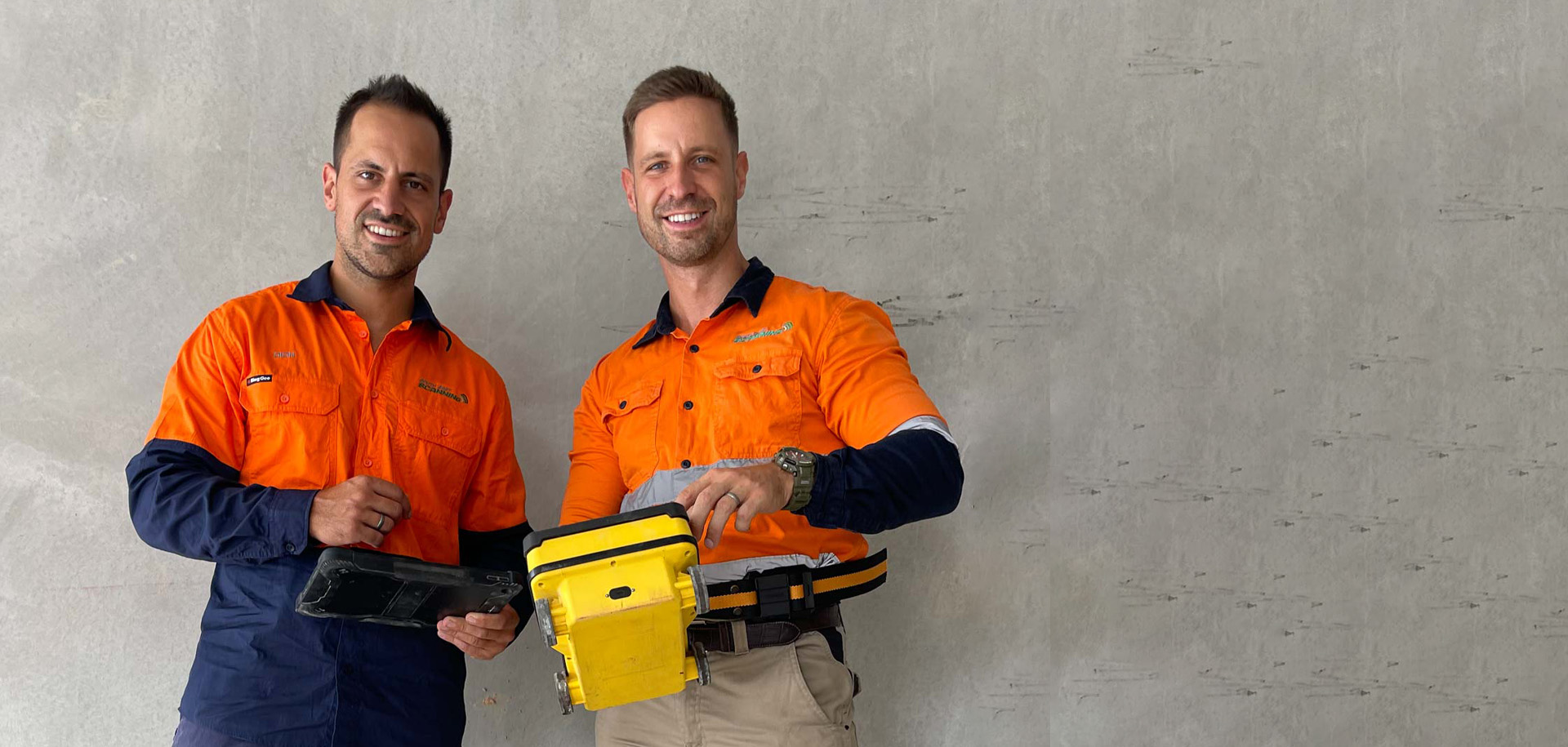
EV charger installs are typically delivered under a head contractor or council contract, which means the locating work needs to stand up to scrutiny — not just protect the crew on the day. South East Scanning's reports classify findings against AS5488 Quality Levels, from QL-D (desktop records only) through to QL-B (verified EM readings) and QL-A (physically potholed and confirmed). For principal contractors and councils signing off on works near legacy infrastructure, that level of defensible documentation matters as much as the scan itself — it's the difference between a verbal assurance and a record that stands up if a dispute or incident review ever comes back to the trenching phase.
Program Certainty
Confirmed trench lines mean fewer surprises, delays, or redesigns once cabling work is underway.
Damage Prevention
Protects live services, redundant fuel infrastructure, and worker safety before excavation starts.
Defensible Records
AS5488-classified reporting gives principal contractors and councils a documented basis for sign-off.
Same-Day Turnaround
Reporting delivered same-day as standard, so trenching schedules aren't held up waiting on results.
Do all EV charger sites need a GPR scan, or just former service stations?
Former servos carry the highest legacy risk, but any site with existing buildings, car parks, or landscaping — council depots, shopping centres, workplaces — can have undocumented services. If a BYDA response doesn't fully account for private on-site infrastructure, a scan is worth the modest cost against the risk of striking something unrecorded.
How long does a pre-trenching GPR scan take?
Most charger trenching runs are scanned within a few hours on site, with safe-dig zones marked in real time for the installation crew and a full report delivered the same day.
Does GPR detect old underground fuel tanks?
Yes. GPR is well suited to detecting large buried objects like decommissioned fuel storage tanks, alongside conduits, pipework, and voids, making it a practical first check on any site with a fuel retailing history.
EV charging infrastructure is going into some of the most service-dense, poorly documented ground in South East Queensland — former servos, ageing retail precincts, and decades-old council land. A BYDA enquiry is the right first step, but it isn't the full picture. Pairing it with a GPR and EM locate before trenching begins protects the installation crew, keeps the program on schedule, and gives principal contractors a defensible record to sign off against.
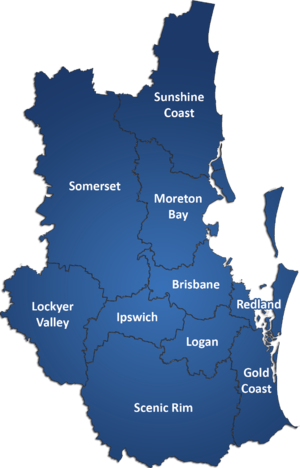
South East Scanning provides same-day GPR and utility locating across Brisbane, the Gold Coast, Ipswich, and the Sunshine Coast. Read more about how our Dial Before You Dig service works, or explore some of the lesser-known capabilities of GPR on our blog. Request a free quote today to get your next charger install scanned before the first trench is cut.