A new pump skid, a heavier conveyor drive, extra storage racking or a switchroom upgrade. On industrial and commercial sites, structures are constantly asked to carry more than they did on day one. Before that new load goes in, someone needs to confirm the existing slab or frame can take it, and on an older asset with patchy records, that's rarely a simple question. Here's when adding load to an existing structure calls for an independent RPEQ assessment, and how accurate scan data makes that assessment possible.
Why New Loads Need a Structural Answer
Every slab, plinth and frame was designed for a set of loads. When equipment is added, upgraded or moved, those loads change, sometimes significantly. Whether the existing structure can safely carry the new load depends on how it was actually built: its thickness, the reinforcement inside it, the cover to that steel and its current condition.
Confirming that capacity is structural engineering work. In Queensland, it needs to be carried out or directly supervised by a Registered Professional Engineer of Queensland (RPEQ), and certifiers, asset owners and principal contractors will typically ask for formal confirmation before the new load goes in.
On ageing industrial structures, as-built drawings can be missing, incomplete or out of date. Without verified information about what's inside the concrete, an engineer has to rely on assumptions, which can lead to overly conservative answers or unnecessary strengthening.
When You Need a Load Assessment
An independent RPEQ assessment is worth considering whenever the question is no longer just "what's in the slab?" but "can it carry this?" Common situations include:
Added Plant and Equipment
New or heavier plant on existing slabs, plinths and framing.
Ageing Structures
Verifying the capacity and remaining life of older RC and steel structures.
Change of Use
Confirming a building is structurally fit for a new purpose.
Tender Sign-Off
Projects where RPEQ sign-off is a condition of being eligible to tender.
This applies across process plant, conveyors and transfer stations, switchrooms and MCC buildings, tank and vessel supports, materials handling, and fertiliser and chemical plant structures.
 Verified Data Before New Loads
What the Scan Data Gives Your Engineer
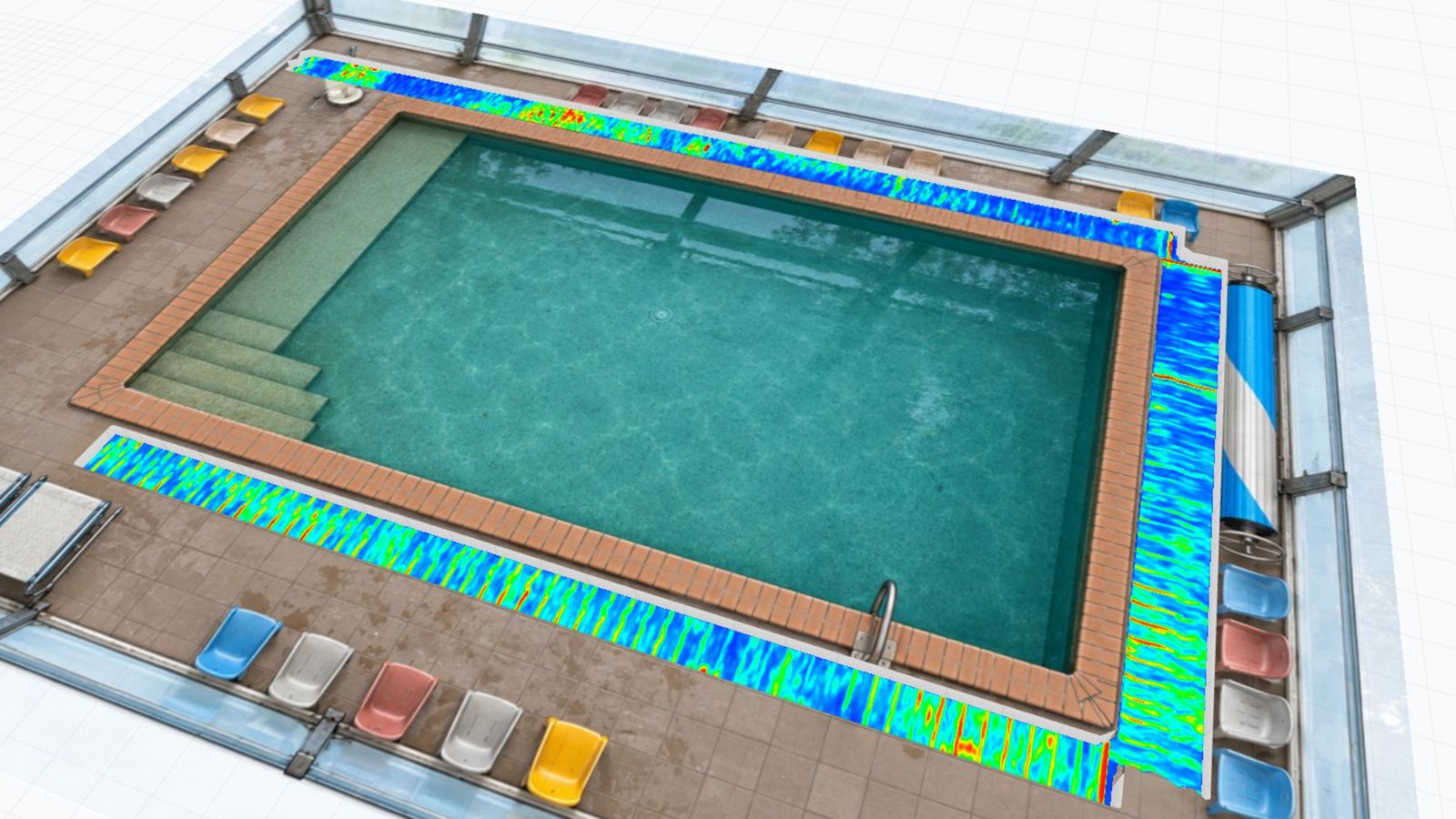
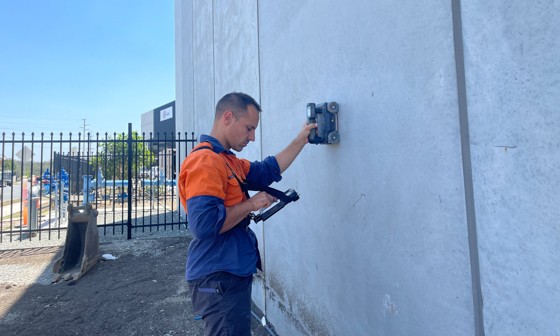
A load assessment is only as good as the information behind it. GPR scanning gives the engineer verified, site-specific data in place of assumptions, including:
Reinforcement Layout
Where the steel sits and its spacing across the element.
Cover to Steel
How deep the reinforcement is from the surface.
Voids and Anomalies
Areas that need closer investigation before loads are added.
GPR gives a strong read on bar location, cover and spacing, but it can't reliably confirm bar diameter. Where diameter matters to the assessment, we'll say so up front and factor it into scoping. You can read more about why cover matters in our article on concrete cover and structural integrity, and why voids matter in detecting voids in concrete slabs.
QNP Moura Nitrates Plant Slab Investigation
We used GPR to investigate an 800 mm deep reinforced concrete slab at an industrial site in Moura, QLD, mapping the reinforcement layout, spacing and cover across the slab, columns and plinths. The survey flagged overlapping reinforcement and a possible void for further investigation.
You can read the full QNP Moura report to see the kind of scan record an engineer works from.
From Site Scan to Certified Assessment
Scan and Record
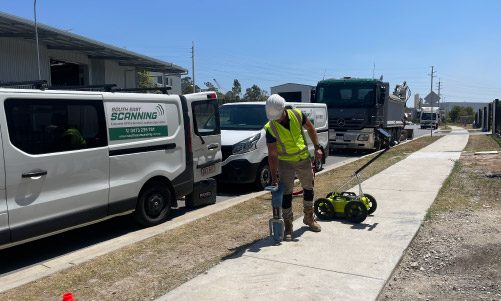
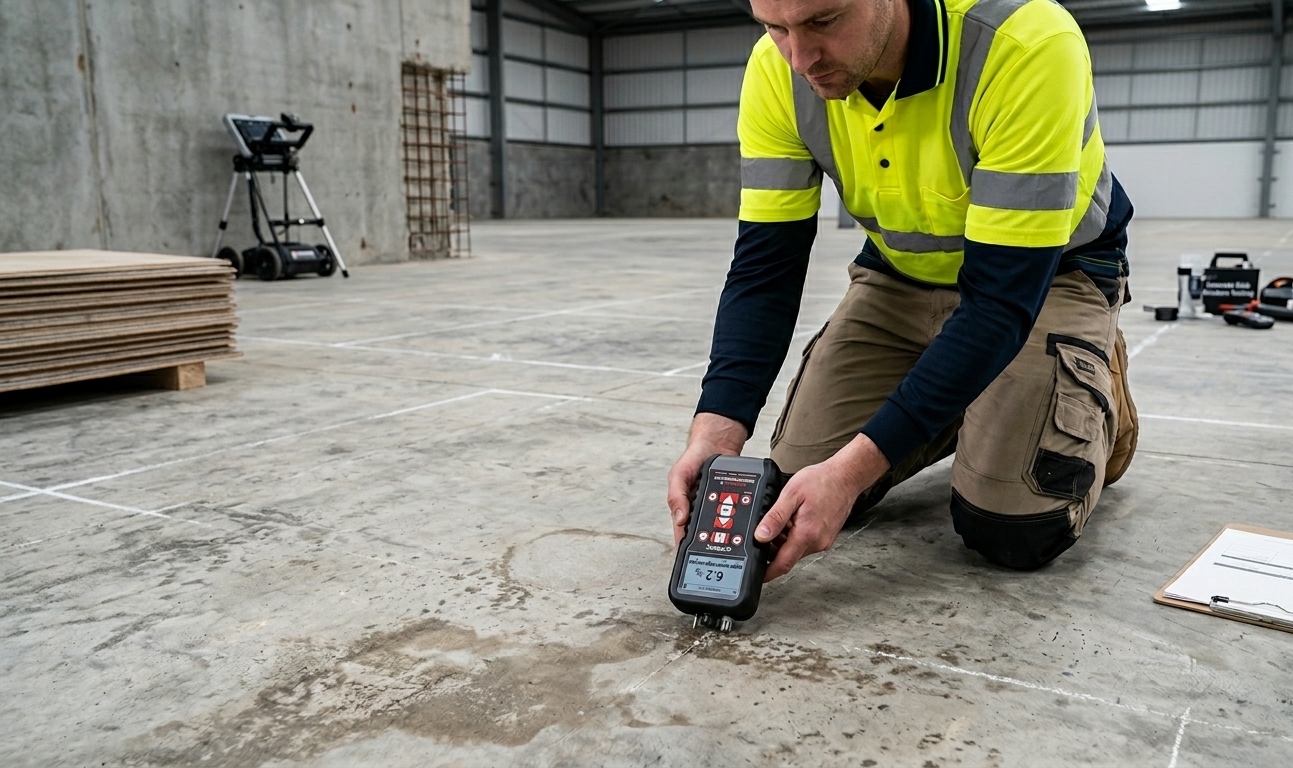
Our team scans the slab, plinth or frame to a defined method with stated accuracy and records what's there.
Agree the Engineering Brief
One clear question is agreed up front, such as whether a slab can carry a specific piece of plant in a specific location.
Independent Assessment
Our partner RPEQ engineers at Axioma Engineering prepare the capacity assessment and calculation to the relevant Australian Standard, then certify it.
Two Documents Issued
You receive the factual scan record and the certified engineering assessment separately, with drawings, calculations, a clear conclusion and any conditions.
 Industrial Site Scanning
 Structural Investigation
Turnaround and Where We Work
A standard assessment takes 3 to 10 business days from a complete pack, depending on scope and complexity, with expedited turnaround available on confirmation. Most assessments are prepared from scan data and the project brief, and engineer site attendance can be arranged on request.
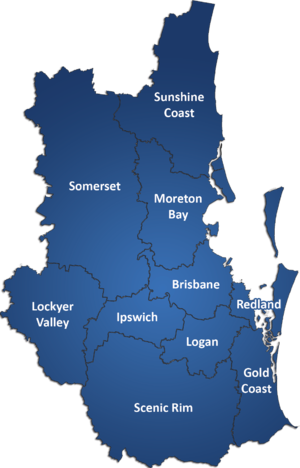
We work across South East Queensland, including Brisbane, the Gold Coast, Ipswich and the Sunshine Coast, and through the Central Queensland resources and industrial corridor, including Mackay, Gladstone, Rockhampton, Moura, Emerald and the Bowen and Surat Basins. For portfolios with repeat assessments across multiple sites, deliverables can be systemised so every report follows the same format.
Frequently Asked Questions
Do I need an engineer to add equipment to an existing slab?
If the new equipment adds load to an existing slab or structure, it's common to need an RPEQ to confirm the structure can safely carry it, particularly where a certifier, asset owner or principal contractor needs formal confirmation.
Can a concrete scan tell me how much load a slab can take?
No. A scan records what's in the concrete, such as reinforcement layout, spacing and cover. Deciding whether the slab can carry a load is a separate engineering assessment that uses the scan data as an input.
What does the certified assessment include?
Annotated, scaled drawings, stated tolerances and limits of detection, a structural calculation to the relevant Australian Standard, a clear conclusion with any conditions, and the engineer's RPEQ signature and stamp.
How long does a load assessment take?
A standard assessment takes 3 to 10 business days from a complete pack, depending on scope and complexity. Expedited turnaround is available on confirmation.
Adding load to an existing structure shouldn't come down to guesswork. Verified scan data and an independent RPEQ assessment give you a clear, certified answer before new plant or equipment goes in, and a document your certifier, asset owner or principal contractor can rely on.
If you're planning new loads on an existing slab or frame, send us the structure and the question and we'll tell you within two business days whether it needs an engineer and what it costs. Learn more about our RPEQ certification service, or call 1300 175 543.