Every excavation, core hole, and slab cut carries a hidden variable that most Queensland contractors think they've already managed. New data from Before You Dig Australia suggests otherwise, putting a firm dollar figure on a problem the industry has quietly tolerated for years. Here's what the numbers actually mean for anyone picking up a jackhammer or an excavator bucket in South East Queensland.
Before You Dig Australia is the national referral service that contractors, homeowners, and trades rely on to find out what utilities might be buried beneath a job site. Its research and advocacy work has recently pushed underground utility strikes into sharper focus, quantifying just how much damage, downtime, and cost these incidents impose on the economy each year. The figure runs into the billions, and it captures far more than the immediate repair bill for a severed cable or ruptured gas line. It includes emergency response costs, project delays, legal exposure, insurance claims, and in the worst cases, injury or loss of life.
A $5 Billion National Problem
BYDA's research puts a hard number on what the industry has quietly tolerated for years — and the pattern behind it is what really matters for anyone about to break ground.
What makes the research significant isn't just the headline number. It's what sits behind it: a clear pattern showing that a large share of strikes happen on sites where a Dial Before You Dig referral had already been obtained. In other words, the paperwork was done, the process was technically followed, and the strike happened anyway. For contractors working across the Gold Coast, Brisbane, Sunshine Coast, and Ipswich, that gap is not an abstract policy issue. It's the difference between a job that finishes on schedule and one that ends with a damaged asset, a furious utility provider, and a project shut down while everyone works out what went wrong.
 Closing the Gap Between Records and Reality
Ask most builders, concreters, or plumbers what they do before breaking ground, and you'll hear some version of "we did a Dial Before You Dig." It's become shorthand for due diligence, the box that gets ticked before the real work starts. The trouble is that this is where a lot of contractors mentally close the file, treating the referral as the finish line rather than the starting point.
A DBYD referral is genuinely useful. It pulls together plans from the utility asset owners in the area and tells you, broadly, what services might be running through or near your site. But it's built from records, not from what's actually in the ground in front of you today. Those records vary enormously in age and accuracy — some services were installed decades ago and documented with hand-drawn sketches or approximate distances from a fence line that's since moved. Others have been relocated, added, or abandoned without the records ever being updated.
None of this makes the DBYD referral worthless — it makes it a starting reference, not a verified map of what you're about to dig, drill, or core into. Depth information, where it exists at all, is often a rough estimate rather than a measured fact.
 Records vs What's Actually There
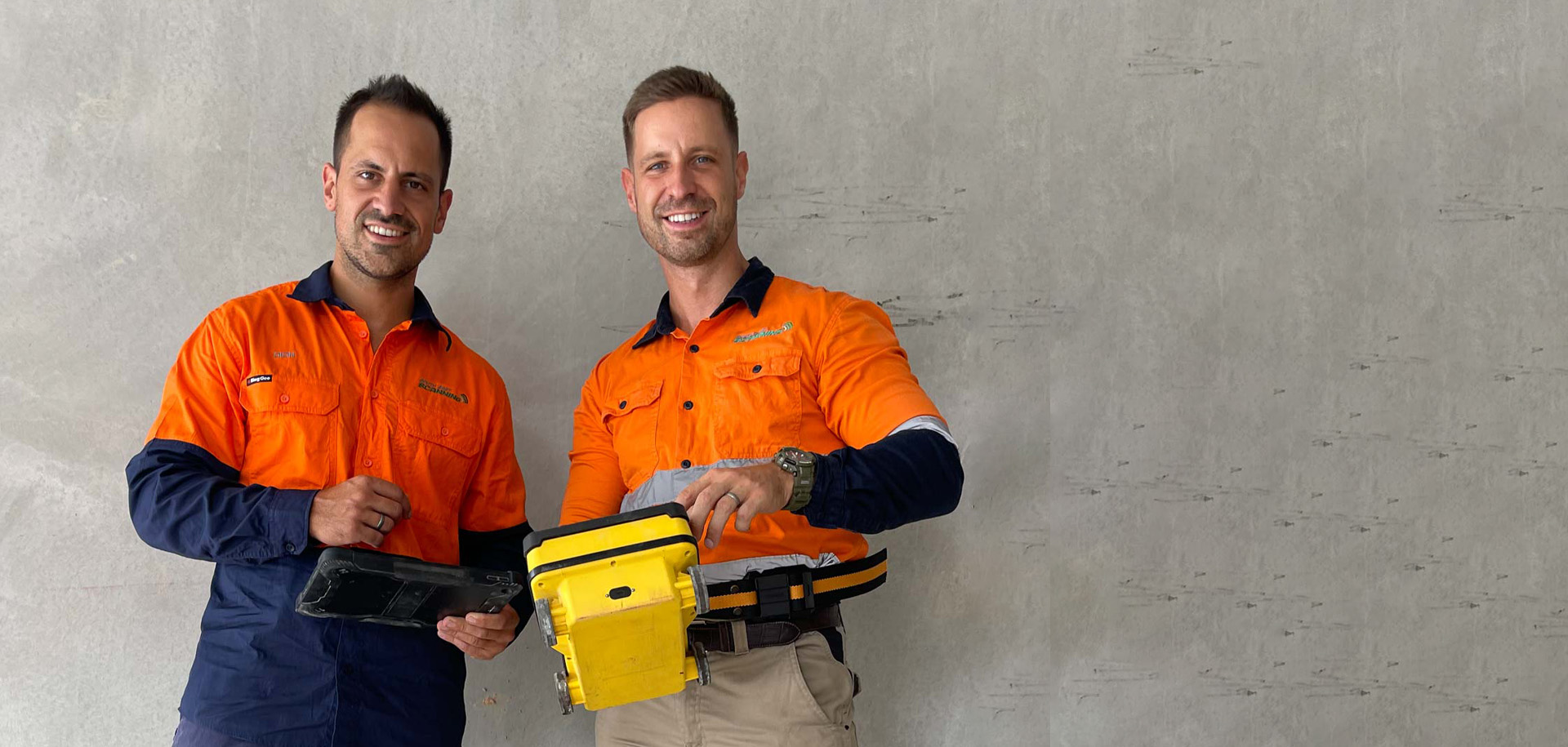 Aidan & Dion, South East Scanning
This is the distinction that BYDA's data is really pointing at, and it's one every QLD contractor needs to internalise: there's a fundamental difference between knowing what might be underground and knowing what is underground, exactly, at the point where your equipment is about to make contact. A DBYD referral gives you the former — a compiled overlay of utility corridors, generally accurate at the level of "there's a gas main running roughly through this area," but not precise enough to tell you the service sits 340mm below the surface, 120mm to the left of where the plan suggests.
Ground Penetrating Radar
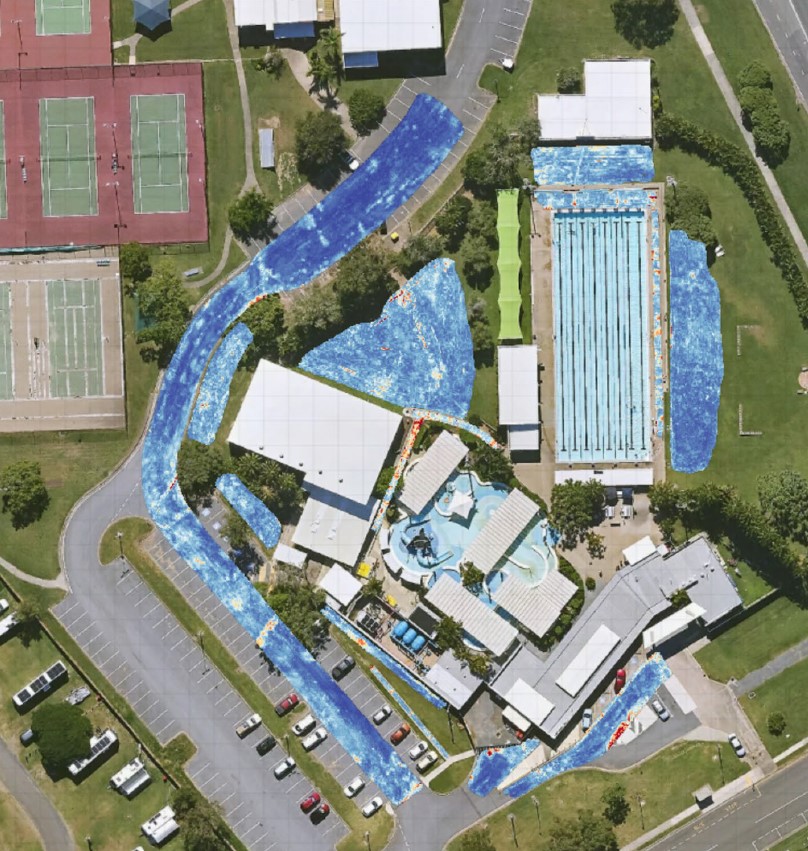
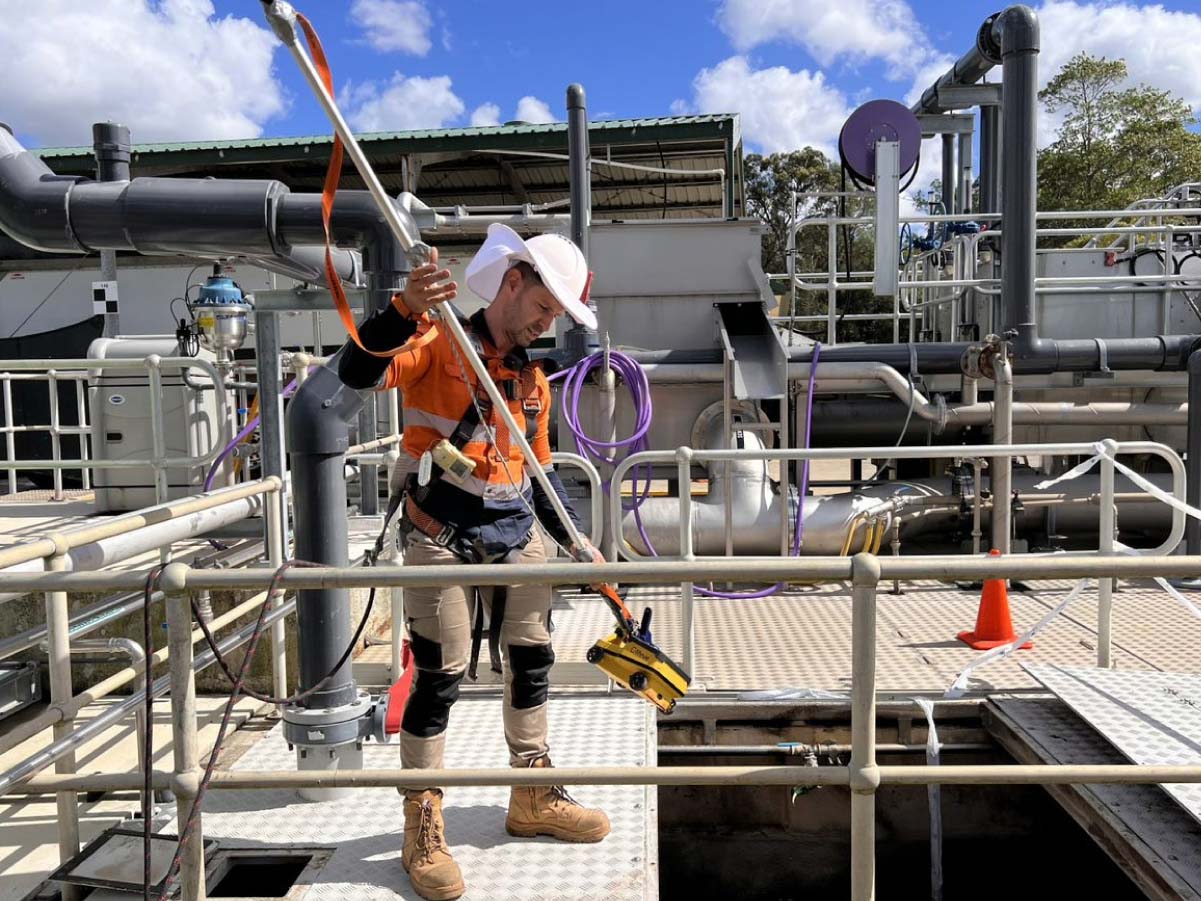
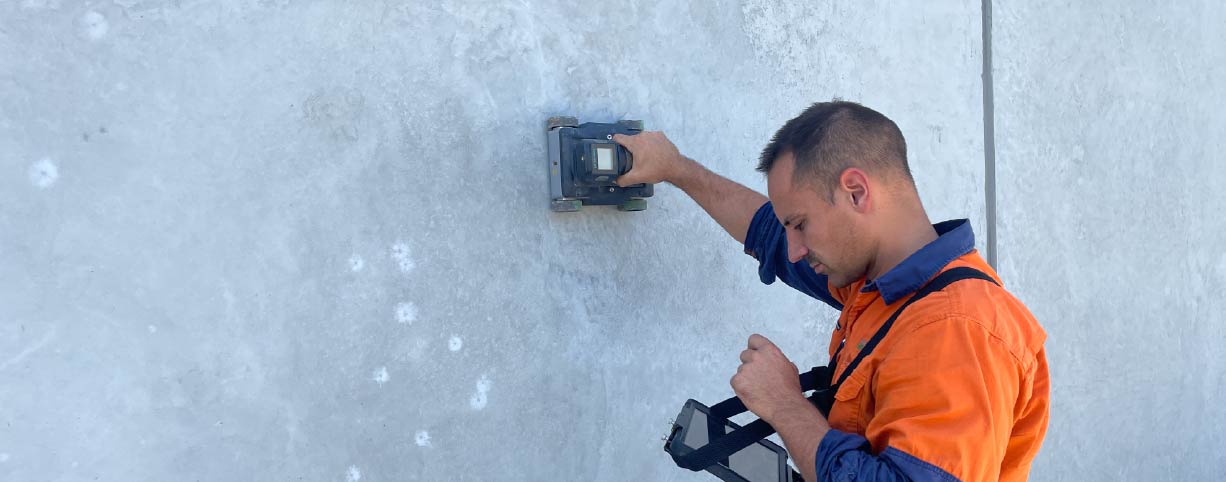
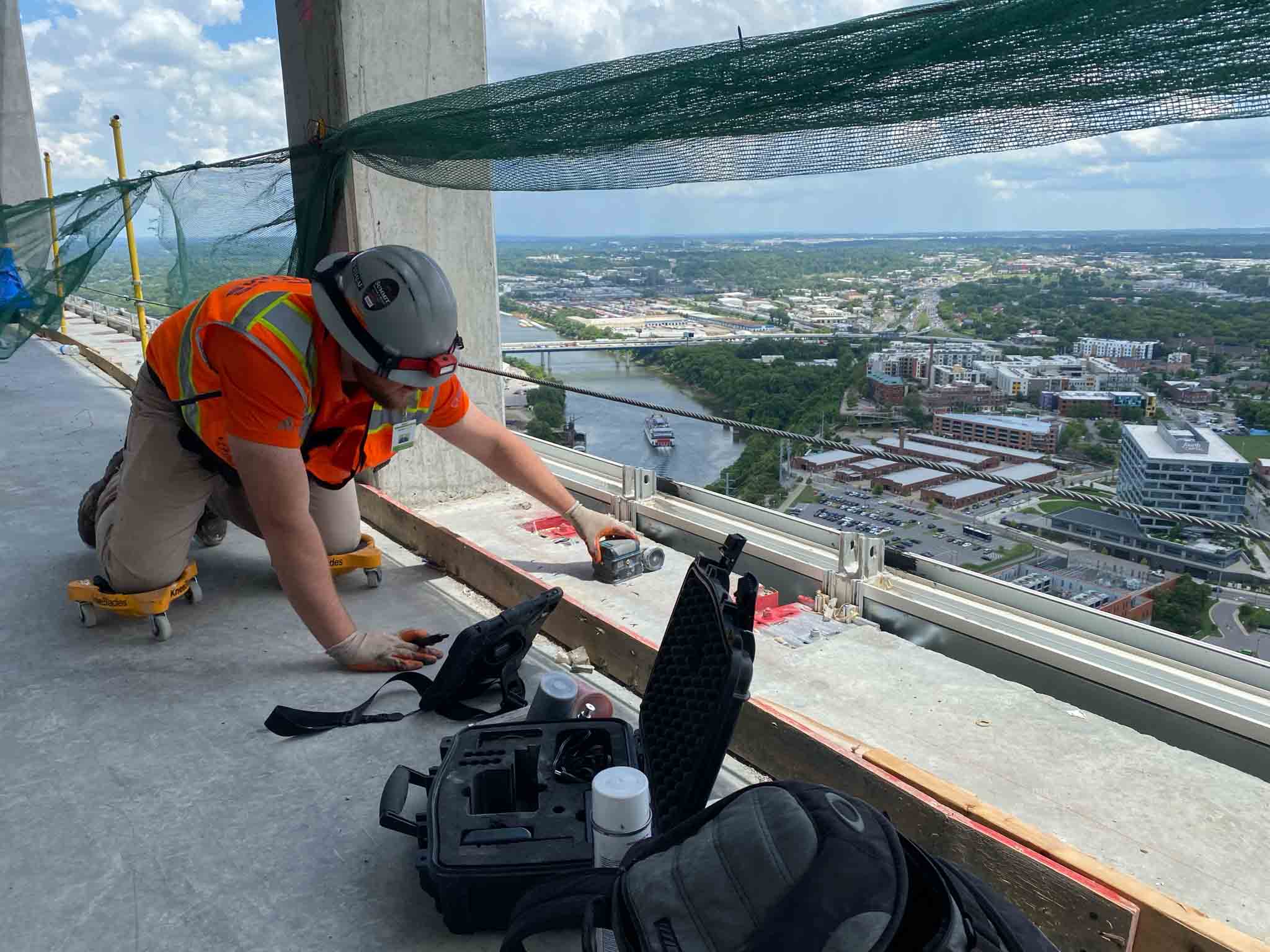
GPR sends radar pulses into concrete or soil and interprets the reflections to map reinforcing steel, post-tension cables, conduits, voids, and service lines with genuine precision — often referred to informally as a "concrete X-ray" because of how clearly it reveals what's hidden beneath the surface.
Electromagnetic Locating
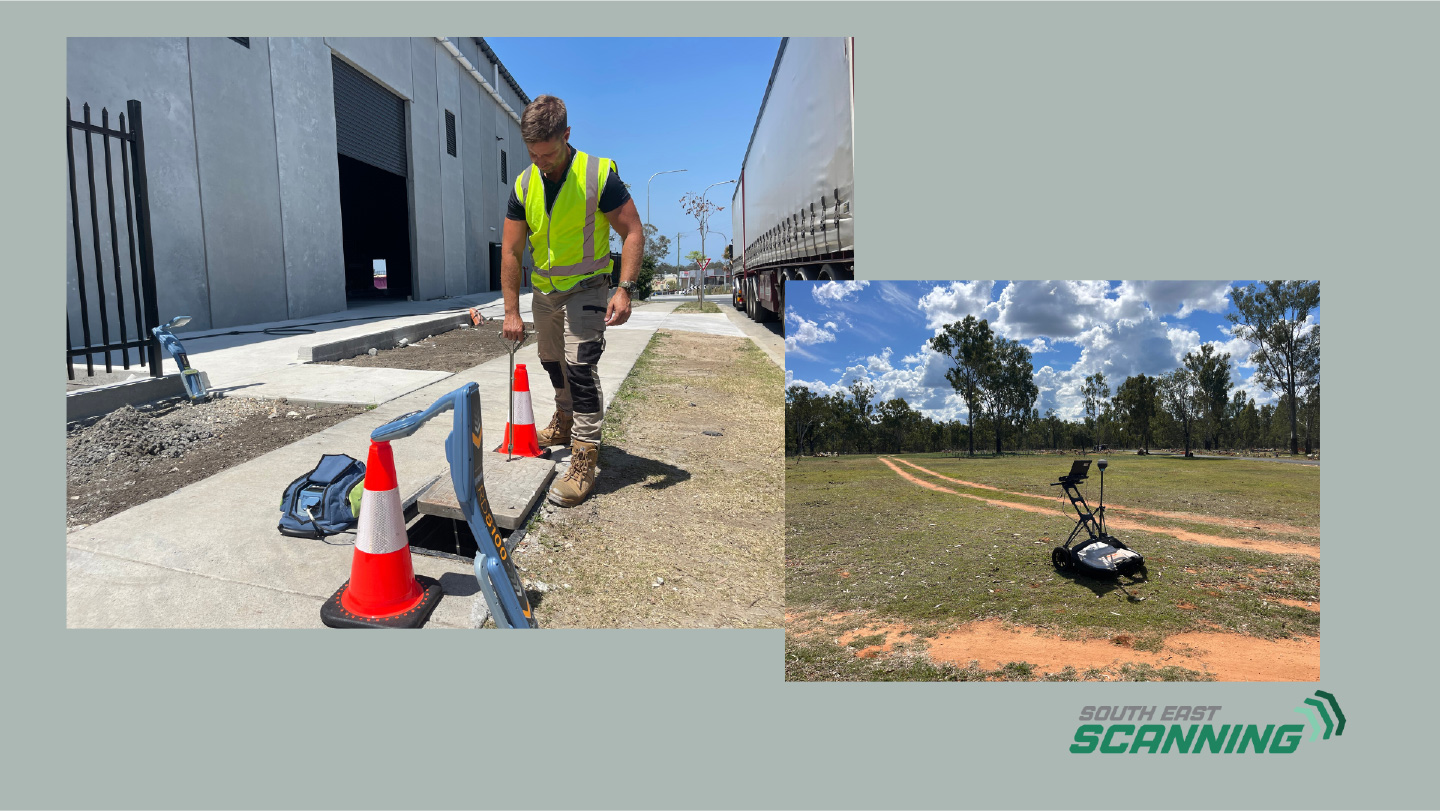
EM locating complements GPR by tracing live metallic services and marking their path and depth directly on site, confirming position rather than relying on where a decades-old record says a service should be.
Physical verification is what closes the gap between an approximate plan and a confirmed location. GPR and electromagnetic locating don't rely on historical records at all — they read what's actually there, in real time, on the day you're working. The combination of a DBYD referral plus physical scanning is what actually constitutes thorough due diligence. One without the other leaves a hole in your risk management, and it's precisely that hole BYDA's research suggests the industry keeps falling into.
 Verifying Before the Trench Line Is Cut
For a Queensland contractor who wants to close this gap rather than just gesture at it, the process isn't complicated, but it does require treating locating as a distinct trade step rather than an administrative formality. It starts with lodging the DBYD referral early enough that the responses can actually inform planning, not just get filed away once digging has begun.
Lodge DBYD Early
Submitted early enough that responses actually inform planning, not filed away once digging has begun.
Scan Before Coring
GPR scanning ahead of coring or cutting identifies reinforcing, post-tension cables, and conduits first.
Locate Before Trenching
EM locating traces and marks the exact path of live services, confirming depth and position on site.
Assess Complex Sites
Larger or uncertain-ground jobs extend into broader subsurface and geotechnical assessment.
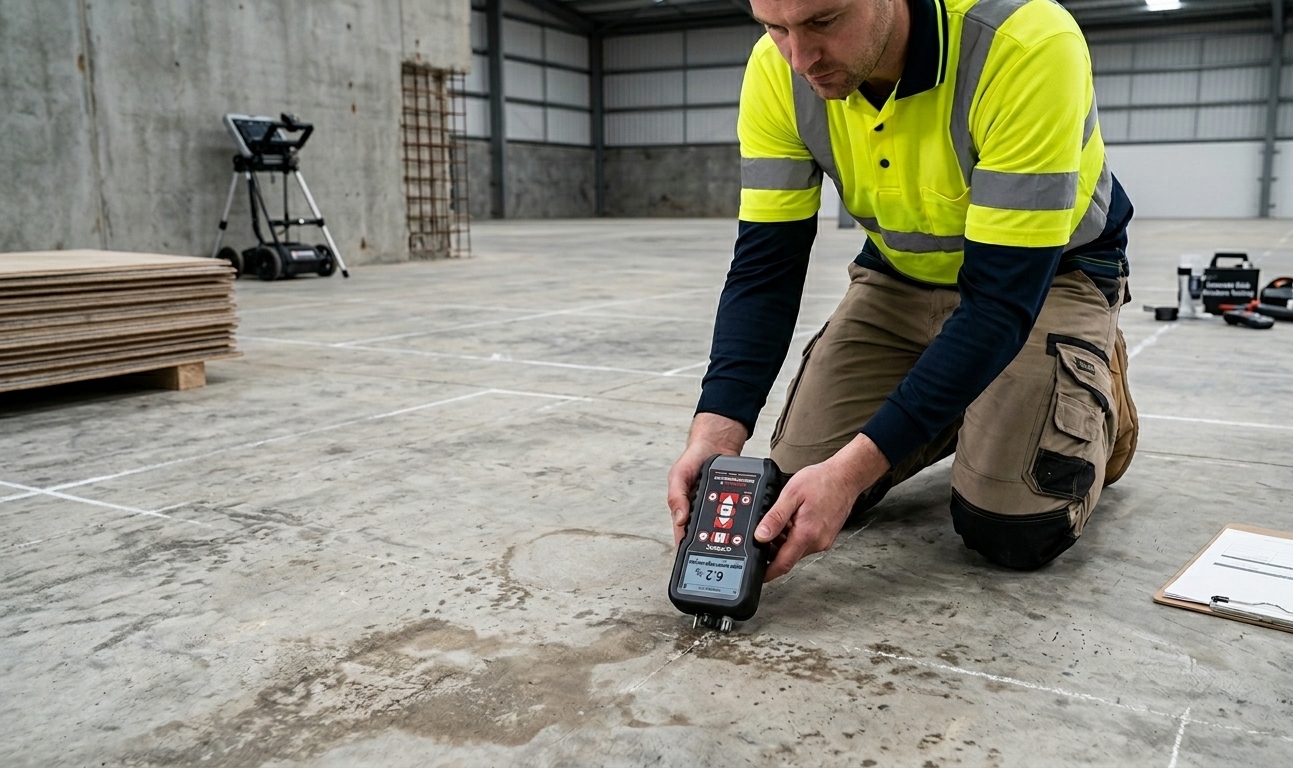
For concrete work specifically, that means GPR scanning ahead of coring or cutting to identify reinforcing, post-tension cables, and conduits before a drill bit finds them the hard way. For trenching and excavation, it means electromagnetic locating to trace and mark the exact path of live services referenced in the DBYD response, confirming depth and position rather than assuming the plan is accurate. The goal in every case is the same: replace an approximate plan with a verified, on-site picture before anyone starts digging. That's not extra paperwork. It's the step that actually prevents the strike, the delay, and the six-figure repair bill BYDA's data shows is happening far too often across the country.
 On-Site Assessment
 Cutting With Confidence
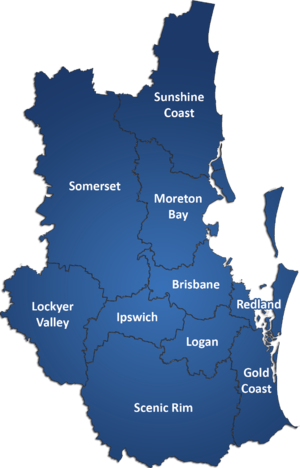
South East Scanning, run by brothers Aidan and Dion, provides GPR concrete scanning, utility and service locating, and subsurface assessment across the Gold Coast, Brisbane, Sunshine Coast, Ipswich, and regional Queensland.
If your next job involves coring, cutting, trenching, or excavation, get in touch before you start. A DBYD referral is step one. Let's make sure step two actually happens.